Have you ever felt overwhelmed by the stresses of daily life and searched for a way to find some peace and calm? Yoga could be the answer you’re looking for. By practicing yoga, you can alleviate stress and cultivate a sense of inner peace. But where do you start?

What Makes Yoga Effective for Stress Relief?
Yoga combines physical postures, breathing exercises, and mindfulness to create a holistic approach to well-being. When practiced regularly, yoga can help you manage stress, improve flexibility, and enhance mental clarity. It works by activating the parasympathetic nervous system, which helps your body enter a state of relaxation. This is in stark contrast to the fight-or-flight response triggered by stress.
Benefits of Yoga
- Reduces Stress and Anxiety: Yoga helps activate your relaxation response, reducing the production of stress hormones.
- Enhances Flexibility: Stretching in various poses improves your range of motion and reduces muscle tension.
- Increases Mindfulness: Focusing on your breath and body movements encourages present-moment awareness.
- Improves Sleep: A more relaxed body and mind can help you sleep better.
- Boosts Overall Well-being: The combination of physical activity and mental clarity promotes a more balanced state of mind.
Finding the Right Yoga Poses for Stress Relief
With so many yoga poses to choose from, it can be challenging to know where to start. Here are the top 5 yoga poses specifically designed for stress relief. These poses are beginner-friendly and can be done comfortably at home.
1. Child’s Pose (Balasana)
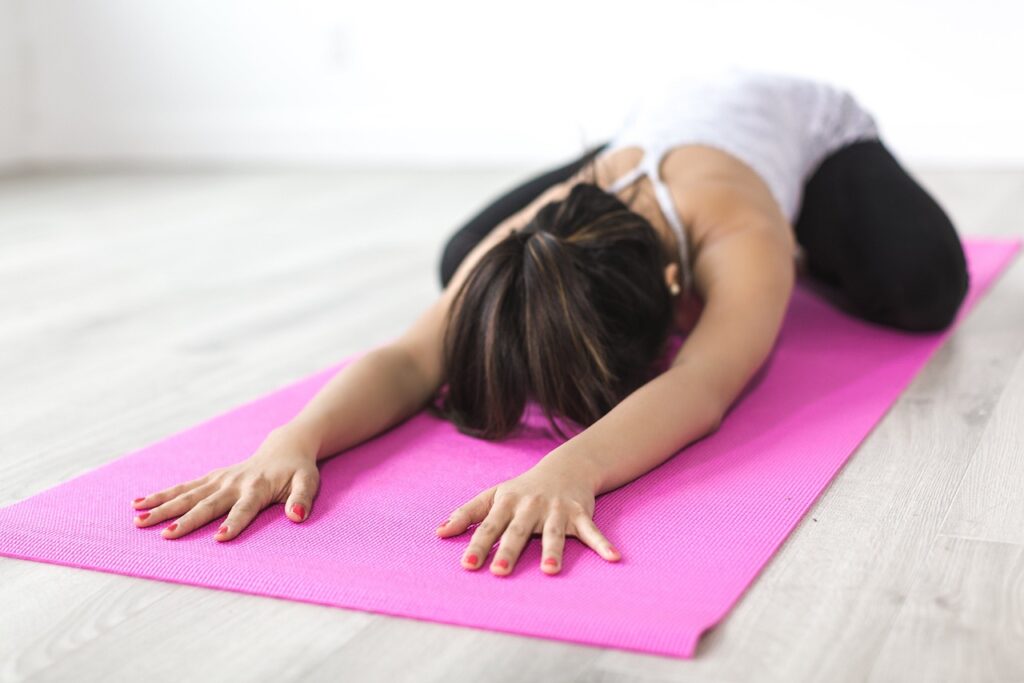
Child’s Pose is one of the most restful and calming poses in yoga. It’s excellent for grounding yourself and taking a mental break from daily stressors.
How to Do Child’s Pose:
- Kneel on the floor with your big toes touching and your knees spread wide apart.
- Sit back on your heels and lay your torso down between your thighs.
- Extend your arms forward with palms facing the floor or rest them alongside your body.
- Relax your forehead on the mat and focus on your breath.
Duration: Hold this pose for 1-3 minutes, taking slow, deep breaths.
| Benefits | Description |
|---|---|
| Reduces Anxiety | Provides a sense of comfort and calm. |
| Stretches Lower Back | Releases tension in the lower back area. |
| Improves Digestion | The gentle pressure on the abdomen can help with digestion. |
2. Cat-Cow Pose (Marjaryasana-Bitilasana)
Cat-Cow Pose is a gentle flow between two poses that warms up the spine and helps alleviate stress and tension.
How to Do Cat-Cow Pose:
- Begin on your hands and knees in a tabletop position.
- Inhale as you drop your belly towards the mat in Cow Pose, lifting your chin and chest upward.
- Exhale as you draw your belly to your spine and round your back up towards the ceiling in Cat Pose.
Duration: Perform this sequence for 1-2 minutes, focusing on your breath.
| Benefits | Description |
|---|---|
| Increases Spinal Flexibility | Helps in loosening up the spine, making it more flexible. |
| Relieves Back and Neck Tension | Alleviates muscle tightness and stress in the back and neck. |
| Promotes Emotional Balance | Synchronizing breath with movement can enhance mental clarity. |
3. Legs Up the Wall Pose (Viparita Karani)
Legs Up the Wall Pose is incredibly restorative and has known benefits for reducing stress and anxiety. It’s often recommended for people who experience insomnia due to stress.
How to Do Legs Up the Wall Pose:
- Sit next to a wall and lie down on your back. Swing your legs up to rest against the wall.
- Scoot your hips closer to the wall for comfort.
- Extend your arms out to the sides, palms facing up.
Duration: Hold for 5-15 minutes, allowing yourself to completely relax.
| Benefits | Description |
|---|---|
| Reduces Anxiety | Encourages deep relaxation and mental peace. |
| Improves Circulation | Enhances blood flow by using gravity. |
| Relieves Lower Back Tension | Takes pressure off the lumbar spine. |
4. Standing Forward Bend (Uttanasana)
Standing Forward Bend gives a nice stretch to the hamstrings and lower back, helping to release physical and mental stress.
How to Do Standing Forward Bend:
- Stand with your feet hip-width apart.
- Inhale to lengthen your spine, then exhale and fold forward from your hips.
- Allow your crown to hang down, and if needed, bend your knees slightly for comfort.
- Hold your elbows with opposite hands and let gravity do the work.
Duration: Stay in this pose for 1-2 minutes, relaxing into the stretch.
| Benefits | Description |
|---|---|
| Alleviates Stress | Encourages a gentle stretch that can ease mental tension. |
| Stretches Hamstrings and Spine | Loosens tight muscles in the back and legs. |
| Improves Blood Flow to Brain | Enhances circulation, which can help with mental clarity. |
5. Corpse Pose (Savasana)
Corpse Pose is often practiced at the end of a yoga session to integrate the benefits of the workout fully. It is a state of restful awareness that helps you find complete relaxation.
How to Do Corpse Pose:
- Lie flat on your back with your legs slightly apart and arms resting alongside your body, palms facing up.
- Close your eyes and take deep breaths, releasing any tension from your body.
- Focus on your breath and allow yourself to sink into the mat.
Duration: Hold this pose for 5-10 minutes, aiming to reach a state of deep relaxation.
| Benefits | Description |
|---|---|
| Deep Relaxation | Promotes a state of complete mental and physical relaxation. |
| Reduces Stress and Anxiety | Helps in calming the nervous system. |
| Integrates Practice | Allows the benefits of the yoga session to be absorbed fully. |
Tips for Practicing Yoga for Stress Relief
Create a Calm Environment
Find a quiet space in your home where you won’t be disturbed. Make this space inviting by adding soft lighting, calming scents like lavender, and perhaps some soothing background music.
Consistency is Key
For yoga to be an effective stress-relief tool, practice it regularly. Even just 10-15 minutes a day can make a significant difference in how you feel.
Listen to Your Body
Yoga is not about pushing yourself to the limit. Pay attention to what your body needs and avoid any positions that cause pain. Each pose should feel comfortable and sustainable.
Focus on Breathing
Incorporate deep breathing exercises into your practice. Focusing on your breath not only enhances the benefits of each pose but also helps quiet the mind.
Integrating Yoga Into Your Daily Routine
Morning Routine
Starting your day with a few yoga poses can set a positive tone for the rest of your day. Consider incorporating Child’s Pose and Cat-Cow Pose into your morning routine to gently wake up your body and mind.
Workday Breaks
Using short yoga sessions during work breaks can be a great way to manage stress throughout the day. Standing Forward Bend and Legs Up the Wall Pose can be easily done during a quick break to rejuvenate your energy levels.
Evening Wind Down
Unwind from the day’s stress by ending your evening with a calming yoga session. Practicing Corpse Pose before bed can help prepare your mind and body for a restful night’s sleep.
Weekly Yoga Sessions
In addition to daily practices, consider setting aside time for longer yoga sessions a few times a week. This could be a dedicated hour of practice where you can explore additional poses and deepen your relaxation.
| Time of Day | Suggested Poses | Benefits |
|---|---|---|
| Morning | Child’s Pose, Cat-Cow Pose | Energizes and prepares you for the day. |
| Workday Breaks | Standing Forward Bend, Legs Up the Wall | Refreshes and rejuvenates mid-day. |
| Evening | Corpse Pose | Calms the mind and prepares you for sleep. |
Conclusion
Incorporating yoga into your daily routine can be a powerful way to mitigate stress and enhance your overall well-being. The five yoga poses mentioned here—Child’s Pose, Cat-Cow Pose, Legs Up the Wall Pose, Standing Forward Bend, and Corpse Pose—are particularly effective for stress relief. Remember to practice regularly, listen to your body, and focus on your breathing. By doing so, you’ll not only improve your physical health but also cultivate a more peaceful and balanced mind.