
Have you ever wondered how to take your bodyweight exercise routine to the next level? If you’re looking to boost your strength and stability without relying on weights or gym equipment, advanced bodyweight exercises can offer a challenging and effective solution.
What Are Advanced Bodyweight Exercises?
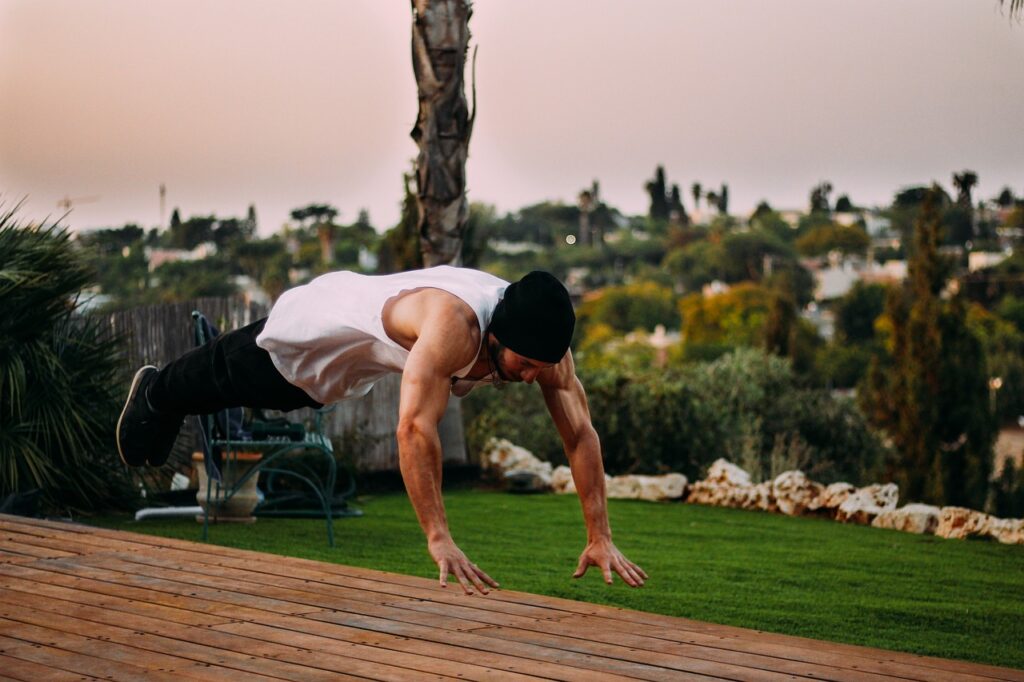
Advanced bodyweight exercises go beyond the basics like push-ups, squats, and planks. These exercises engage multiple muscle groups, improve balance, and enhance overall muscular stability. They require greater control, coordination, and strength, thereby pushing your physical limits and encouraging muscle growth and endurance.
Benefits of Advanced Bodyweight Exercises
Before diving into specific exercises, understanding the benefits can motivate you to incorporate them into your routine.
Total Body Strength
Advanced exercises work multiple muscle groups simultaneously. This comprehensive approach improves overall strength faster than isolated movements would.
Improved Balance and Coordination
By engaging your stabilizer muscles, these exercises enhance your balance and coordination. This can lead to better performance in other physical activities.
Increased Flexibility and Mobility
Many advanced bodyweight movements require a full range of motion, helping improve your flexibility and joint mobility over time.
Minimal Equipment Needed
Another appealing factor is the minimal requirement for equipment. Most of these exercises use your body’s weight, making them perfect for working out at home or while traveling.
Prerequisites for Advanced Bodyweight Exercises
Before diving into advanced exercises, ensure you have a solid foundation. It’s important to master basic bodyweight movements to avoid injury and ensure proper form. Here’s a list of exercises you should be comfortable with:
- Push-ups
- Pull-ups
- Squats
- Lunges
- Planks
Being proficient in these areas will prepare you for more demanding and complex movements.
Advanced Upper Body Exercises
Handstand Push-up
The handstand push-up challenges your shoulder, triceps, and upper chest strength while developing your core stability.
How to Perform:
- Start in a handstand position against a wall.
- Lower yourself until your head touches the ground.
- Push back up to the starting position.
Tips:
- Ensure you maintain tight core engagement.
- Gradually build strength by starting with pike push-ups if you are new to this move.
Archer Push-up
Archer push-ups are an excellent way to target your chest, triceps, and shoulders more intensely than traditional push-ups.
How to Perform:
- Start in a standard push-up position.
- Lower your body to one side, extending the opposite arm outward.
- Push back up and alternate to the other side.
Tips:
- Keep your body as straight as possible.
- Graduate to this move after mastering regular push-ups.
One-Arm Push-up
One-arm push-ups are a testimony to upper body strength and core stability.
How to Perform:
- Start in a standard push-up position.
- Remove one hand and place it on your back or out to the side for balance.
- Lower your chest until it almost touches the ground and push back up.
Tips:
- Keep your feet wider apart for better stability.
- Practice with incline one-arm push-ups to build the necessary strength.
Advanced Lower Body Exercises
Pistol Squat
Pistol squats are a full-body exercise focusing on leg strength, flexibility, and balance.
How to Perform:
- Stand on one leg with the other leg extended forward.
- Lower your body into a squat position, keeping the extended leg off the ground.
- Push back up to the starting position.
Tips:
- Use a support like a chair or your hand for balance when starting.
- Ensure your knee does not cave inward for optimal safety.
Bulgarian Split Squat
This exercise targets your quads, hamstrings, and glutes, enhancing lower body strength and stability.
How to Perform:
- Place one foot behind you on a bench or elevated surface.
- Lower into a squat with your supporting leg.
- Push back up and repeat on the other side.
Tips:
- Maintain an upright torso.
- Make sure your front knee does not extend past your toes.
Shrimp Squat
Shrimp squats are lesser-known but highly effective in building leg strength and balance.
How to Perform:
- Stand on one leg, grabbing the ankle of the opposite leg behind you.
- Lower into a squat, bringing your knee close to the ground.
- Push back to the starting position.
Tips:
- Begin with partial shrimp squats to build strength and coordination.
- Use a wall for balance at first.
Advanced Core Exercises
Dragon Flag
Popularized by Bruce Lee, the dragon flag is a supreme test of core strength.
How to Perform:
- Lie on your back and hold onto a stable surface behind your head.
- Lift your entire body, keeping it straight, and lower it slowly without touching the ground.
Tips:
- Maintain a straight line from shoulders to feet.
- Start with leg raises to build strength.
Windshield Wipers
This move targets your obliques while also engaging your entire core.
How to Perform:
- Lie on your back with legs lifted straight up.
- Rotate your legs side to side, controlling the motion with your core.
Tips:
- Perform this exercise slowly to maximize core engagement.
- Keep your shoulders flat on the ground.
L-sit
The L-sit scrutinizes your core, hip flexors, and shoulder strength.
How to Perform:
- Sit on the ground with legs extended in front.
- Push through your hands, lifting your body off the ground.
- Hold this position, keeping legs and body straight.
Tips:
- Start with tucked L-sits to build the required strength.
- Engage your core thoroughly throughout the exercise.
Advanced Full-Body Exercises
Muscle-up
The muscle-up combines a pull-up and dip, epitomizing upper body and core strength.
How to Perform:
- Start with a standard pull-up.
- Transition into a dip at the top of the movement.
- Extend your arms to push your body above the bar.
Tips:
- Master pull-ups and dips beforehand.
- Use a controlled movement, avoiding excessive swinging.
Human Flag
The human flag demands extraordinary core, shoulder, and hip strength.
How to Perform:
- Grab a vertical pole with one hand high and the other low.
- Lift your body horizontally, keeping it straight.
Tips:
- Start with side planks to develop oblique strength.
- Use progressive holds and partial lifts to build up to the full movement.
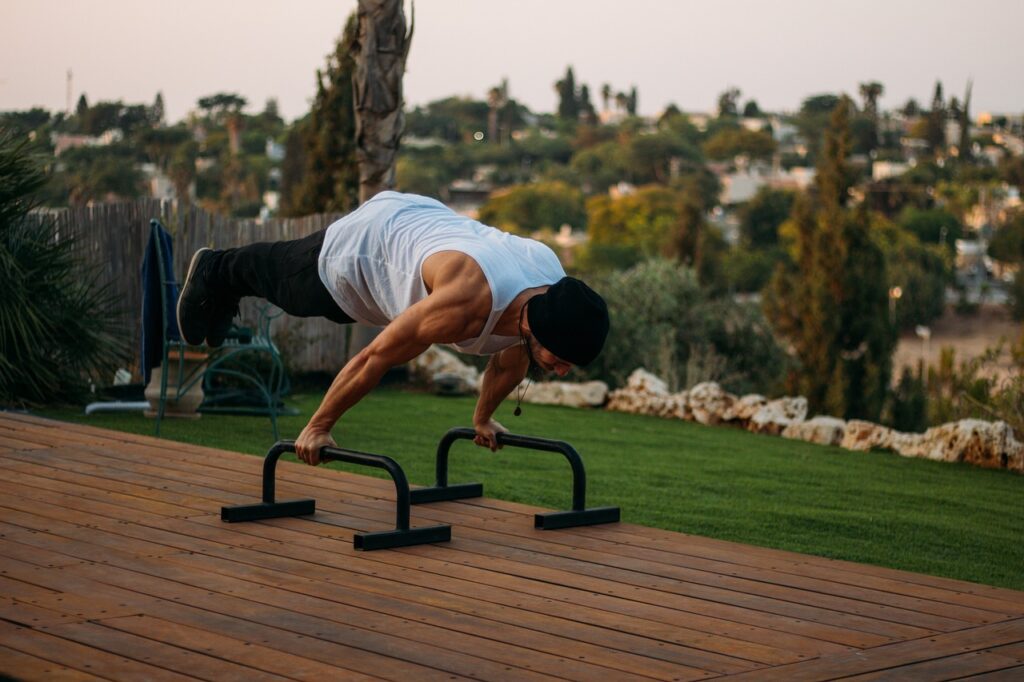
Planche
A planche is the ultimate test of upper body strength and balance, where your body is held parallel to the ground.
How to Perform:
- Start in a tuck planche position on parallel bars or the ground.
- Extend your legs out while keeping arms straight.
Tips:
- Begin with frog stands and progress to tuck planches.
- Engage your shoulders and core throughout the exercise.
Sample Workout Routine
Once you’re ready to include advanced bodyweight exercises in your fitness routine, a well-structured program can help you stay organized and progress effectively. Below is a sample workout routine:
| Day | Exercise | Sets | Reps/Time |
|---|---|---|---|
| Monday | Handstand Push-up | 4 | 6-8 |
| Archer Push-up | 3 | 10 (each side) | |
| Dragon Flag | 4 | 5 | |
| Tuesday | Pistol Squats | 4 | 8 (each leg) |
| Bulgarian Split Squat | 3 | 10 (each leg) | |
| Windshield Wipers | 4 | 12 (each side) | |
| Wednesday | Rest | – | – |
| Thursday | Handstand Push-up | 4 | 6-8 |
| One-Arm Push-up | 3 | 5-8 (each arm) | |
| L-sit | 3 | 10 seconds | |
| Friday | Muscle-up | 4 | – |
| Shrimp Squats | 3 | 8 (each leg) | |
| Planche Holds | 4 | 5 seconds | |
| Saturday | Conditioning | – | – |
| Sunday | Rest | – | – |
Note: The number of sets and reps may vary based on your current fitness level.
Progressing Safely
While these advanced exercises are highly rewarding, safety should always be your priority. Here are some tips to ensure you progress safely:
- Warm-Up: Always start with a proper warm-up to prepare your muscles and prevent injury.
- Form First: Proper form is essential. It’s better to do fewer reps with perfect form than to risk injury with poor technique.
- Gradual Progression: Increase the difficulty and intensity gradually. Pushing too hard can lead to overtraining and injuries.
- Listen to Your Body: Pay attention to how your body feels. Rest if you feel pain or discomfort.
- Recovery: Ensure you have adequate rest days and recovery periods in your routine.
Conclusion
Advanced bodyweight exercises can take your fitness to unparalleled heights, building strength, stability, and flexibility without the need for a gym. By mastering these powerful movements, you can develop a balanced, strong, and agile body capable of performing extraordinary feats.
Remember, the journey to advanced bodyweight mastery is gradual and requires dedication, patience, and consistency. Embrace the challenges, maintain proper form, and most importantly, enjoy the transformative process.