Are you looking to improve your flexibility and wondering what the best stretching routines are to achieve this goal? Flexibility is an essential aspect of overall fitness, impacting not only your physical health but also your daily comfort and performance in various activities. Whether you’re an athlete, a fitness enthusiast, or someone just trying to maintain a healthy lifestyle, integrating stretching into your routine can yield significant benefits.
Benefits of Stretching
Stretching offers a multitude of benefits that extend beyond simply feeling good. Regularly incorporating stretches into your fitness routine can improve your overall well-being in various ways.
Increased Range of Motion
A consistent stretching routine enables your muscles and joints to move more efficiently, leading to a greater range of motion. This is particularly beneficial for athletes or anyone involved in physical activities, as it can enhance performance and reduce the risk of injuries.
Improved Circulation
Stretching promotes better blood flow to your muscles, which in turn supports muscle recovery and reduces soreness after workouts. Improved circulation also means that your muscles receive more oxygen and nutrients, aiding in quicker recovery.
Reduced Risk of Injury
By increasing your flexibility, you enhance your body’s ability to handle physical stress. Flexible muscles and tendons are less likely to experience strains and tears, lowering the likelihood of injuries during exercise or everyday activities.
Stress Relief
Incorporating stretches into your daily routine can help alleviate stress. The act of stretching can be relaxing, reducing tension in muscles that often accumulate due to daily stressors. This can also contribute to better mental health and overall well-being.
Types of Stretching
To create an effective stretching routine, it’s important to understand the different types of stretching and how they can benefit you.
Static Stretching
Static stretching involves holding a stretch in a challenging but comfortable position for a period, typically between 15 to 60 seconds. This type of stretching is commonly used to increase flexibility and is best performed after a workout when your muscles are warm.
Dynamic Stretching
Dynamic stretching involves moving parts of your body through a full range of motion in a controlled manner. It is often used as a warm-up before physical activities because it helps to increase blood flow, muscle temperature, and range of motion.
PNF Stretching
Proprioceptive Neuromuscular Facilitation (PNF) stretching is an advanced form of flexibility training that involves both stretching and contracting the target muscle group. This type of stretching is very effective for quickly increasing flexibility and improving muscle strength. It’s usually done with a partner or a professional.
Best Stretching Routines
To improve your flexibility, it’s essential to follow a well-structured stretching routine that targets all the major muscle groups. Below are some of the best stretching routines categorized by body part.
Upper Body Stretches
Neck Stretch
- Sit or stand with your back straight.
- Slowly tilt your head to one side, bringing your ear towards your shoulder.
- Hold the stretch for 15-30 seconds.
- Repeat on the other side.
Shoulder Stretch
- Stand or sit up straight.
- Bring one arm across your chest.
- Use your opposite hand to gently press against the arm, enhancing the stretch.
- Hold for 15-30 seconds and repeat on the other side.
Triceps Stretch
- Raise one arm overhead, bending the elbow so your hand reaches down towards your back.
- Use the opposite hand to grab the elbow and gently pull it.
- Hold for 15-30 seconds and switch sides.
Lower Body Stretches
Hamstring Stretch
- Sit on the ground with one leg extended and the other bent.
- Reach towards the toes of the extended leg.
- Hold for 15-30 seconds before switching legs.
Quadriceps Stretch
- Stand with your feet hip-width apart.
- Bend one knee, bringing your heel towards your buttocks.
- Use your hand to hold your ankle and keep your knees together.
- Hold for 15-30 seconds and switch sides.
Calf Stretch
- Stand facing a wall, placing your hands on it.
- Step one foot back, keeping it straight, and bend the front knee.
- Hold the stretch for 15-30 seconds and repeat with the other leg.
Full-Body Stretching Routine
A full-body stretching routine ensures you address all major muscle groups, improving overall flexibility and reducing the risk of muscle imbalances.
| Stretch | Duration |
|---|---|
| Neck Stretch | 15-30 seconds |
| Shoulder Stretch | 15-30 seconds |
| Triceps Stretch | 15-30 seconds |
| Hamstring Stretch | 15-30 seconds |
| Quadriceps Stretch | 15-30 seconds |
| Calf Stretch | 15-30 seconds |
| Cat-Cow Stretch | 5-10 reps |
| Child’s Pose | 30 seconds |
| Seated Forward Fold | 15-30 seconds |
| Pigeon Pose | 15-30 seconds |
Cat-Cow Stretch
- Start on all fours with your hands under your shoulders and knees under your hips.
- Inhale, arch your back, and tilt your pelvis up (cow pose).
- Exhale, round your back, and tuck your pelvis under (cat pose).
- Repeat for 5-10 reps.
Child’s Pose
- Kneel on the floor, touch your big toes together and sit on your heels.
- Separate your knees about hip-width apart and lay your torso down between your thighs.
- Stretch your arms out in front of you and hold for 30 seconds.
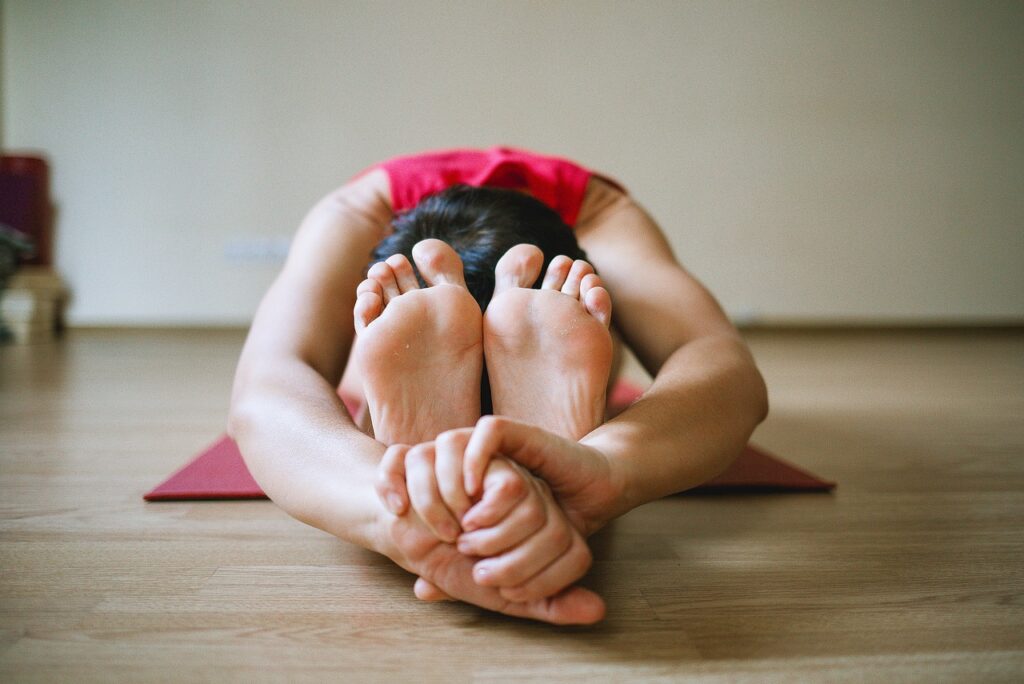
Seated Forward Fold
- Sit with your legs extended in front of you.
- Inhale and sit up tall; as you exhale, fold forward, reaching towards your toes.
- Hold for 15-30 seconds, feeling the stretch in your hamstrings and back.
Pigeon Pose
- Start in a plank position.
- Bring your right knee forward and place it behind your right wrist. Your right ankle should be near your left wrist.
- Stretch your left leg back and lower your hips toward the floor.
- Hold for 15-30 seconds and repeat on the other side.
Tips for Effective Stretching
Implementing some best practices can help you get the most out of your stretching routines.
Warm Up First
Stretching cold muscles can increase the risk of injury. It’s essential to warm up your body before stretching with activities like brisk walking, jogging, or light cardio exercises.
Maintain Proper Form
Incorrect stretching techniques can lead to injury rather than preventing it. Focus on maintaining proper form and using controlled, deliberate movements for each stretch.
Breathe
Proper breathing can greatly enhance your stretching routine. Inhale deeply before you move into a stretch and exhale as you deepen it. This helps your muscles relax and makes the stretch more effective.
Listen to Your Body
Stretching should not cause pain. If you feel any sharp pain or discomfort, ease out of the stretch and reassess your technique. Only stretch to the point where you feel slight tension, not pain.
Stay Consistent
Flexibility takes time and consistency to improve. Make stretching a regular part of your fitness routine for the best results. Even dedicating just 10-15 minutes a day can lead to significant improvements over time.
Advanced Stretching Techniques
For those looking to further enhance their flexibility, advanced techniques can be very effective.
Active Stretching
Active stretching involves contractions of the muscles while you stretch. For instance, extending your leg and holding it up in the air without any support is an active stretch for the quadriceps and hip flexors.
Myofascial Release
Myofascial release involves applying pressure to tight areas of your fascia (the connective tissue around muscles) to relieve tension and improve flexibility. This can be done using foam rollers, massage balls, or through professional massage therapy.
Yoga
Yoga is a practice that combines strength, flexibility, and breathing exercises, making it an excellent way to improve overall flexibility. Poses range from beginner to advanced, allowing for gradual progression.
Sample Weekly Stretching Plan
Creating a weekly plan can help ensure you stay on track with your stretching goals. Here is a sample plan that targets all major muscle groups and incorporates various types of stretching.
| Day | Focus Area | Type of Stretching |
|---|---|---|
| Monday | Full Body | Dynamic + Static |
| Tuesday | Upper Body | Static |
| Wednesday | Lower Body | Static + PNF |
| Thursday | Rest or Light Stretching | Gentle Yoga |
| Friday | Full Body | Dynamic + Static |
| Saturday | Lower Body | Static + Myofascial |
| Sunday | Full Body | Gentle Yoga |
Monday: Full Body (Dynamic + Static)
- Warm-up with 5-10 minutes of light cardio.
- Dynamic stretches (e.g., arm circles, leg swings) for 5 minutes.
- Full body static stretches outlined earlier.
Tuesday: Upper Body (Static)
- Focus on the neck, shoulders, triceps, and upper back.
- Hold each stretch for 15-30 seconds.
Wednesday: Lower Body (Static + PNF)
- Warm-up with 5-10 minutes of light cardio.
- Static stretches for hamstrings, quadriceps, and calves.
- PNF stretching for hamstrings: Contract for 5 seconds, stretch for 15-30 seconds.
Thursday: Rest or Light Stretching (Gentle Yoga)
- Engage in 20-30 minutes of gentle yoga to promote relaxation and flexibility.
Friday: Full Body (Dynamic + Static)
- Repeat Monday’s routine.
Saturday: Lower Body (Static + Myofascial Release)
- Warm-up with 5-10 minutes of light cardio.
- Static stretching.
- Use a foam roller or massage ball on tight areas.
Sunday: Full Body (Gentle Yoga)
- Engage in a full body gentle yoga session to cap off your week with relaxation and stretching.
Conclusion
Improving your flexibility is a worthy goal that offers numerous physical and mental benefits. By incorporating a variety of stretching techniques and maintaining a consistent routine, you can enhance your range of motion, reduce the risk of injuries, and enjoy a greater sense of well-being.
Remember to listen to your body, maintain proper form, and stay consistent with your efforts. Flexibility is a gradual process, but with time and dedication, you’ll likely see significant improvements. So, include these stretching routines in your fitness plan and reap the rewards of a more flexible, balanced, and healthy body.