
Have you ever felt overwhelmed by stress and wondered if there’s a natural, effective way to manage it? You might be surprised to learn that yoga, an ancient practice, is one of the most beneficial ways to alleviate stress. Whether you’re new to yoga or seasoned on the mat, integrating specific yoga routines into your daily life can significantly reduce stress and promote overall wellness. Let’s explore some of the best yoga workout routines designed specifically for stress relief.

Understanding Stress and Its Impact
Stress is a common part of life, but it can exacerbate both physical and mental health issues when unmanaged. Chronic stress is linked to numerous health problems, including anxiety, depression, heart disease, digestive problems, and sleep disorders, among others.
How Yoga Helps Reduce Stress
Yoga uses a combination of physical postures, breath control, and meditation to enhance mental clarity and calmness. Unlike other forms of exercise, yoga transcends physical activity to include mind-body integration, promoting a state of relaxation and tranquility.
- Physical Postures (Asanas): Help release physical tension in the body.
- Breath Control (Pranayama): Facilitates a focused mind and reduced anxiety.
- Meditation: Brings awareness to the present moment and calms the mind.
Essential Yoga Concepts for Stress Relief
Understanding a few key concepts can make your yoga practice more effective for stress relief.
Mindfulness
Being present in the moment is crucial for alleviating stress. Mindfulness in yoga involves focusing on your breath, movements, and sensations with a non-judgmental attitude.
Breathing Techniques
Known as Pranayama in yoga, controlled breathing techniques help manage stress by calming the nervous system. Techniques include:
- Diaphragmatic Breathing: Deep breathing that involves the diaphragm.
- Alternate Nostril Breathing (Nadi Shodhana): Balances and calms the mind.
- 4-7-8 Breathing: Involves inhaling for 4 seconds, holding breath for 7 seconds, and exhaling for 8 seconds.
Relaxation
Yoga promotes deep relaxation, which aids stress reduction. Savasana, or the Corpse Pose, is a relaxation pose typically done at the end of a yoga session.

Best Yoga Routines for Stress Relief
Now that you understand the essentials, let’s look at some effective yoga workout routines designed for stress relief. Each sequence will focus on combining the physical, mental, and breathing aspects of yoga.
Routine 1: Morning Energizer
This routine is designed to start your day with tranquility and energy.
-
Mountain Pose (Tadasana):
- Stand tall with feet together.
- Ground through your feet and lift your chest.
- Take five deep breaths.
-
Cat-Cow Pose (Marjaryasana-Bitilasana):
- Begin on your hands and knees.
- Inhale into Cow Pose (arch your back, lift your chest and tailbone).
- Exhale into Cat Pose (round the spine, tuck your chin).
- Repeat for ten breaths.
-
Downward-Facing Dog (Adho Mukha Svanasana):
- Start from a tabletop position.
- Lift your knees and straighten your legs.
- Form an inverted V-shape with your body.
- Hold for five breaths.
-
Child’s Pose (Balasana):
- Kneel on the floor, big toes touching and knees apart.
- Sit back on your heels and stretch your arms forward.
- Hold for five breaths.
Routine 2: Midday Stress Buster
Perfect for a lunch break, this routine helps reduce accumulated stress from a busy morning.
-
Seated Forward Bend (Paschimottanasana):
- Sit with your legs extended.
- Inhale, lengthen your spine.
- Exhale, bend forward and reach for your feet.
- Hold for ten breaths.
-
Seated Twist (Ardha Matsyendrasana):
- Sit with your legs extended, bend right knee and place foot outside the left thigh.
- Inhale, lengthen your spine.
- Exhale, twist to the right.
- Hold for five breaths each side.
-
Legs Up the Wall Pose (Viparita Karani):
- Lie on your back with your hips close to a wall.
- Extend your legs up against the wall.
- Rest arms by your sides.
- Hold for ten minutes.
Routine 3: Evening Wind-Down
Wind down your day and prepare your body for restful sleep with this calming routine.
-
Bound Angle Pose (Baddha Konasana):
- Sit with knees bent, soles of the feet together.
- Hold your feet with your hands.
- Inhale, lengthen your spine.
- Exhale, fold forward.
- Hold for ten breaths.
-
Supine Twist (Supta Matsyendrasana):
- Lie on your back, hug knees to chest.
- Drop knees to one side.
- Extend arms out to T-shape.
- Hold for ten breaths each side.
-
Corpse Pose (Savasana):
- Lie on your back, arms and legs extended.
- Close your eyes and focus on breathing.
- Hold for ten to fifteen minutes.
Tips for Enhancing Your Yoga Practice
Consistency is Key
Aim to practice yoga at least three to four times a week to maximize the benefits. Even short, daily sessions can be very effective in managing stress.
Create a Peaceful Space
Having a dedicated yoga space can enhance your practice. Choose a quiet, comfortable area free from distractions.
Use Props
Props like yoga blocks, straps, and bolsters can aid your practice, especially if you’re a beginner or dealing with physical limitations.
Listen to Your Body
Yoga is a personal experience; it’s essential to honor your body’s limits. Avoid pushing yourself into pain.
Additional Practices to Pair with Yoga
Meditation
Meditation complements yoga beautifully. Even five to ten minutes of meditation per day can reinforce the stress-relieving benefits of yoga.
Journaling
Writing down your thoughts can provide clarity and reduce mental clutter. It’s an excellent practice to pair with yoga.
Healthy Diet
Nourishing your body with a balanced, healthy diet supports overall well-being and enhances the effects of your yoga practice.
Beginner-Friendly Yoga Workouts
If you’re new to yoga, this beginner-friendly routine focuses on gentle poses and foundational elements. Start with this and gradually incorporate more complex sequences as you gain confidence.
Routine 1: Gentle Introduction
-
Easy Pose (Sukhasana):
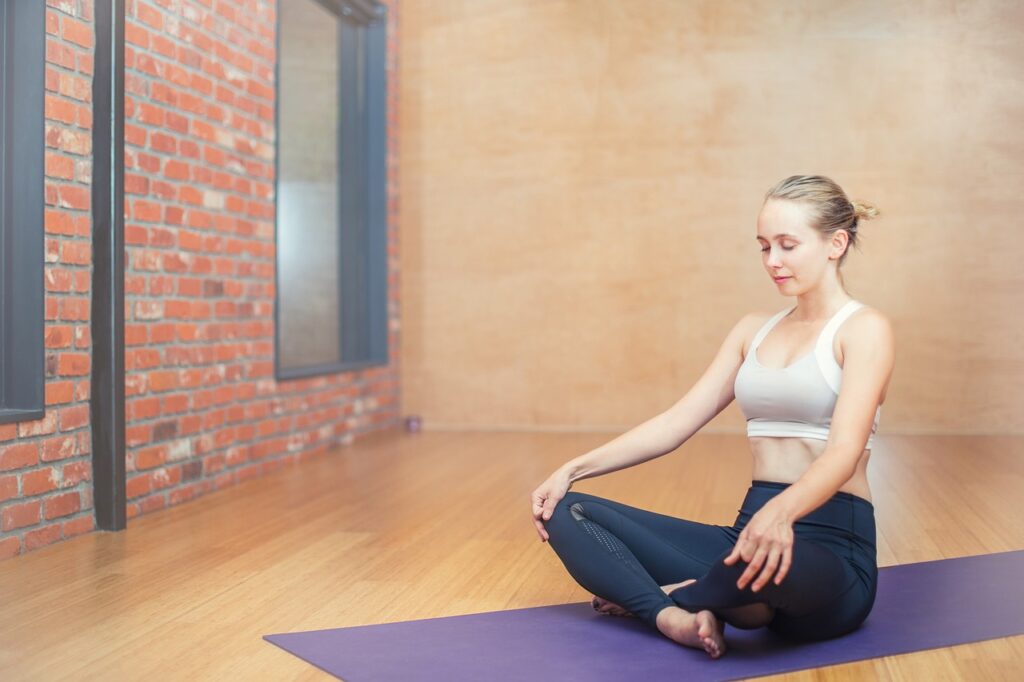
- Sit cross-legged on the floor.
- Rest your hands on your knees.
- Close your eyes and breathe deeply for five minutes.
-
Seated Forward Bend (Paschimottanasana):
- Sit with legs extended.
- Inhale, lengthen your spine.
- Exhale, reach forward.
- Hold for five breaths.
-
Bridge Pose (Setu Bandhasana):
- Lie on your back, knees bent and feet on the floor.
- Lift your hips while keeping shoulders on the mat.
- Hold for five breaths.
-
Corpse Pose (Savasana):
- Lie flat on your back.
- Close your eyes and focus on your breath.
- Hold for ten minutes.

Intermediate Yoga Workouts
Moving past the basics? This intermediate routine adds more dynamic poses to challenge your body and mind.
Routine 1: Intermediate Balance and Strength
-
Warrior II (Virabhadrasana II):
- Stand with feet wide apart.
- Turn right foot out and bend the knee.
- Extend arms parallel to the floor.
- Hold for five breaths, switch sides.
-
Tree Pose (Vrksasana):
- Stand straight and shift weight to one leg.
- Place the sole of the other foot on the inner thigh.
- Press palms together at your chest.
- Hold for five breaths, switch sides.
-
Triangle Pose (Trikonasana):
- Stand with feet wide apart.
- Extend right arm over the right leg, left arm up.
- Hold for five breaths, switch sides.
-
Child’s Pose (Balasana):
- Sit on your heels, stretch forward.
- Hold for five breaths.
Advanced Yoga Workouts
For those more experienced, these advanced sequences integrate challenging postures that require strength, balance, and flexibility.
Routine 1: Advanced Stress Relief Sequence
-
Crow Pose (Bakasana):
- Begin in a squat.
- Place hands on the floor, elbows in.
- Lean forward and lift feet off the floor.
- Hold for five breaths.
-
Headstand (Sirsasana):
- Begin on hands and knees.
- Place forearms on the floor, interlock fingers.
- Lift hips, walk feet closer, and gently kick up.
- Hold for ten breaths.
-
Wheel Pose (Urdhva Dhanurasana):
- Lie on your back, bend knees and place feet on the floor.
- Place hands beside your ears.
- Lift hips and chest off the floor.
- Hold for five breaths.
-
Pigeon Pose (Eka Pada Rajakapotasana):
- From Downward Facing Dog, bring right knee to right wrist.
- Extend left leg back.
- Hold for ten breaths, switch sides.

Conclusion
Incorporating yoga into your routine can be a powerful way to manage stress and improve overall well-being. Whether you are a beginner, intermediate, or advanced practitioner, there’s a suitable yoga sequence that can help you find tranquility amidst the chaos. Remember to practice regularly, listen to your body, and remain patient with the process. By committing to your practice, you’ll soon experience the profound benefits yoga has to offer, helping you navigate life with greater calm and resilience.