
Have you ever found yourself overwhelmed by the sheer variety of kettlebells available at the gym or fitness store? Selecting the right size kettlebell can be daunting, especially if you’re new to strength training or kettlebell exercises. Fear not, as this guide aims to clarify the essential aspects of choosing the appropriate kettlebell for your fitness level, ensuring you enjoy a safe and effective workout.

Understanding Kettlebell Basics
Before diving into the specifics, you should first understand what a kettlebell is and why it is a valuable tool in your fitness regimen. Kettlebells are cast-iron or cast-steel weights shaped like a cannonball with a handle. They come in various sizes and weights. The unique design allows for a range of movements and exercises that can improve strength, flexibility, and cardiovascular health.
Benefits of Kettlebell Training
Kettlebell training offers multiple benefits, including:
- Functional Strength: Enhances your ability to perform everyday activities.
- Cardiovascular Conditioning: Improves heart health and endurance.
- Flexibility and Mobility: Increases range of motion in joints.
- Caloric Burn: High-intensity exercises that burn calories efficiently.
Types of Kettlebells
Kettlebells generally fall into three categories:
- Standard Cast-Iron Kettlebells: Most common type, suitable for beginners to advanced levels.
- Competition Kettlebells: Uniform size regardless of weight, ideal for those interested in kettlebell sport.
- Adjustable Kettlebells: Allow for multiple weights in one, offering versatility.
Understanding these basic elements will help you make an informed decision when selecting the right kettlebell size.
Factors to Consider
Numerous factors should influence your choice of kettlebell size. Making an educated choice ensures you optimize your workout and minimize the risk of injury.
Your Fitness Level
Your current strength and fitness level is perhaps the most critical factor. Beginners should start with lighter weights to master form and technique, while more experienced individuals can handle heavier weights.
Types of Exercises
The type of exercises you plan to do also matters. For instance, kettlebell swings and Turkish get-ups may require different weights. Therefore, having a variety of kettlebells is beneficial.
Goals
Whether you’re aiming for strength building, endurance, or weight loss, your goals will dictate the appropriate kettlebell size.
Form and Technique
Proper form and technique are non-negotiable. Starting with a manageable weight helps you focus on performing exercises correctly.

Recommended Kettlebell Sizes
While individual requirements may vary, the following tables provide a general guideline for selecting kettlebell weights based on sex and fitness level.
For Women
| Fitness Level | Recommended Weight (kg) | Recommended Weight (lbs) |
|---|---|---|
| Beginner | 6 – 8 | 13 – 18 |
| Intermediate | 8 – 12 | 18 – 26 |
| Advanced | 12 – 16 | 26 – 35 |
For Men
| Fitness Level | Recommended Weight (kg) | Recommended Weight (lbs) |
|---|---|---|
| Beginner | 12 – 16 | 26 – 35 |
| Intermediate | 16 – 20 | 35 – 44 |
| Advanced | 20 – 24 | 44 – 53 |
These weight ranges are approximations, and personal comfort and ability should guide your choice.
How to Test and Choose the Right Size
Once you have a general idea of the kettlebell weight suitable for your fitness level, the next step is testing. Here’s a straightforward approach to determine if a kettlebell is right for you:
Test with Basic Exercises
Perform basic kettlebell exercises like swings, goblet squats, or presses. If you can complete 8-12 reps with good form, the weight is likely suitable.
Listen to Your Body
Pay attention to any discomfort or struggle to maintain form. If either occurs, opt for a lighter kettlebell.
Consult Professionals
If in doubt, consult a fitness trainer or physical therapist. They can offer personalized advice based on your body mechanics and fitness goals.
Common Kettlebell Exercises
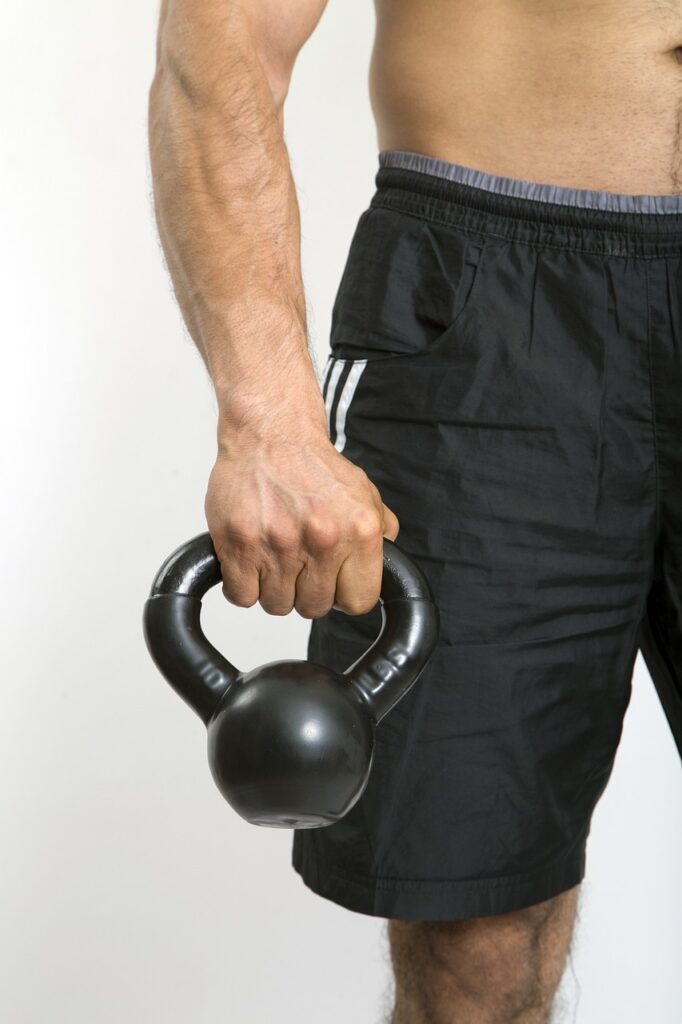
Knowing which exercises you intend to do can also influence your kettlebell size choice. Here are some common exercises and the weight typically recommended for each:
Kettlebell Swing
A fundamental exercise that targets the glutes, hamstrings, and lower back. Beginners might start with 8kg (18 lbs) for women and 12kg (26 lbs) for men.
Goblet Squat
This exercise works the thighs, hips, and buttocks. Starting weights are often 6-8kg (13-18 lbs) for women and 12-16kg (26-35 lbs) for men.
Turkish Get-Up
A full-body movement requiring balance, strength, and coordination. Generally, 6kg (13 lbs) for women and 8kg (18 lbs) for men is a good starting point.
Kettlebell Press
Focuses on the shoulders and arms. Beginners might start with 6kg (13 lbs) for women and 8kg (18 lbs) for men.
Progression and Increasing Kettlebell Weight
As you grow stronger, you will need to progress by increasing the kettlebell weight. However, progression should be gradual to avoid injury and ensure continued improvement.
Signs You’re Ready to Increase Weight
- Easily Completing Reps: If you can perform more than the recommended 8-12 reps without fatigue, it’s time to increase weight.
- Maintaining Form: If your form remains impeccable, even as you near the end of your set, a higher weight will challenge you more effectively.
- Minimal Muscle Soreness: While soreness is natural initially, continually performing exercises without any after-effects might indicate a need for more weight.
How to Increase Weight
- Small Increments: Increase weight in small increments, usually 2-4kg (5-10 lbs).
- Alternate Weights: Use a combination of light and heavy kettlebells in the same session to transition smoothly.
- Focus on Form: Ensure your form remains intact as you increase the weight to avoid injuries.

Importance of a Balanced Routine
To maximize the benefits of kettlebell training, incorporating a balanced routine is essential. This means focusing on different muscle groups and varying the intensity of your workouts.
Include Cardio
Incorporate cardiovascular exercises like running or cycling to complement kettlebell training and improve overall fitness.
Flexibility and Mobility
Stretching and mobility exercises should be part of your routine to maintain a range of motion and prevent stiffness.
Recovery
Allow sufficient recovery time between intense kettlebell sessions. Muscles need time to repair and grow stronger.
Kettlebell Safety Tips
Safety should always be a priority in any fitness routine. Here are some essential tips to ensure you use kettlebells safely:
Warm-Up and Cool-Down
Always begin with a warm-up to prepare your muscles and improve circulation. Similarly, end your workout with a cool-down to relax muscles and reduce soreness.
Proper Footwear
Wear shoes with good support and a flat sole to provide stability during kettlebell exercises.
Secure Grip
Ensure your grip is firm on the kettlebell handle. Using chalk or gloves can help prevent slipping.
Controlled Movements
Avoid jerky or uncontrolled movements. Smooth, controlled motions reduce the risk of injury.
Space and Environment
Ensure you have enough space to perform exercises safely. Be mindful of your surroundings to avoid hitting objects.
Overcoming Common Challenges
Even with the best preparations, you might face some challenges in your kettlebell training journey. Here’s how to overcome them:
Plateauing
It’s common to hit a plateau where progress seems to stall. Overcome this by varying your exercises, increasing weight, or adjusting your routine’s intensity.
Joint Pain
If you experience joint pain, assess your form and ensure you’re using an appropriate weight. Consulting a healthcare professional is advisable.
Motivation
Maintaining motivation can be challenging. Setting clear goals, tracking progress, and even joining a fitness community can keep you motivated.
Additional Resources
Gaining more knowledge can enhance your kettlebell training experience. Consider the following resources:
Books
- “Enter the Kettlebell!” by Pavel Tsatsouline: A comprehensive guide for beginners.
- “Kettlebell Simple & Sinister” by Pavel Tsatsouline: Focuses on foundational exercises.
Online Platforms
- YouTube: Channels like “Kettlebell Kings” offer free tutorials.
- Fitness Apps: Apps like “MyFitnessPal” provide workout plans and tracking tools.
Professional Training
Consider enrolling in a kettlebell class or hiring a personal trainer to ensure you get personalized advice and feedback.
Conclusion
Choosing the right kettlebell size for your fitness level is a nuanced decision that involves considering your fitness level, exercise type, goals, and ensuring proper form and technique. Starting with appropriate weights and gradually progressing ensures a safe and effective workout regimen. Remember to balance your routine, prioritize safety, and seek additional resources to maximize the benefits of kettlebell training. With the right approach, kettlebell exercises can be a transformative addition to your fitness journey.