
Have you ever wondered what High-Intensity Interval Training (HIIT) is and how it can benefit your fitness journey? If so, you’re in the right place! This article will guide you through the essential aspects of HIIT workouts, providing you with useful insights and practical tips. Whether you’re a seasoned athlete or just getting started, there’s something for everyone to learn.
What is High-Intensity Interval Training (HIIT)?
High-Intensity Interval Training, or HIIT, is a form of cardiovascular exercise that alternates short periods of intense anaerobic exercise with less intense recovery periods. The workout is designed to keep your heart rate up and burn more fat in less time. This training method has gained significant popularity because of its efficiency and effectiveness.
Why Choose HIIT?
You might be asking yourself, why should you opt for HIIT over other forms of exercise? The answer lies in its unique benefits:
-
Time-Efficient: Perfect for busy schedules, HIIT workouts are typically shorter than traditional workouts but yield significant results.
-
Calorie Burning: HIIT is known for its high-calorie burn, even after the workout is done—a phenomenon known as the afterburn effect or excess post-exercise oxygen consumption (EPOC).
-
Versatility: You can perform HIIT workouts with a variety of exercises, from running and cycling to bodyweight exercises and weightlifting.
The Science Behind HIIT
Understanding the science behind HIIT can help you grasp its effectiveness. HIIT utilizes both aerobic and anaerobic systems, allowing you to train multiple energy systems in less time. Here’s a simplified breakdown:
Aerobic vs. Anaerobic Systems
-
Aerobic System: Uses oxygen to convert carbohydrates, fats, and proteins into energy. Ideal for long-duration, low- to moderate-intensity activities.
-
Anaerobic System: Does not use oxygen and relies on stored energy sources in muscles. Suitable for short bursts of intense activity.
During a HIIT workout, your body shifts between these two systems. This not only maximizes calorie burn but also improves both your aerobic and anaerobic fitness levels.
The Afterburn Effect
The afterburn effect (EPOC) refers to the amount of oxygen your body needs to restore itself to its resting state after exercise. HIIT has a higher EPOC compared to steady-state cardio, meaning you’ll continue to burn calories long after your workout is over.
Different Types of HIIT Workouts
HIIT is a flexible workout regime—not confined to any one type of exercise. Here are some popular types:
Bodyweight HIIT
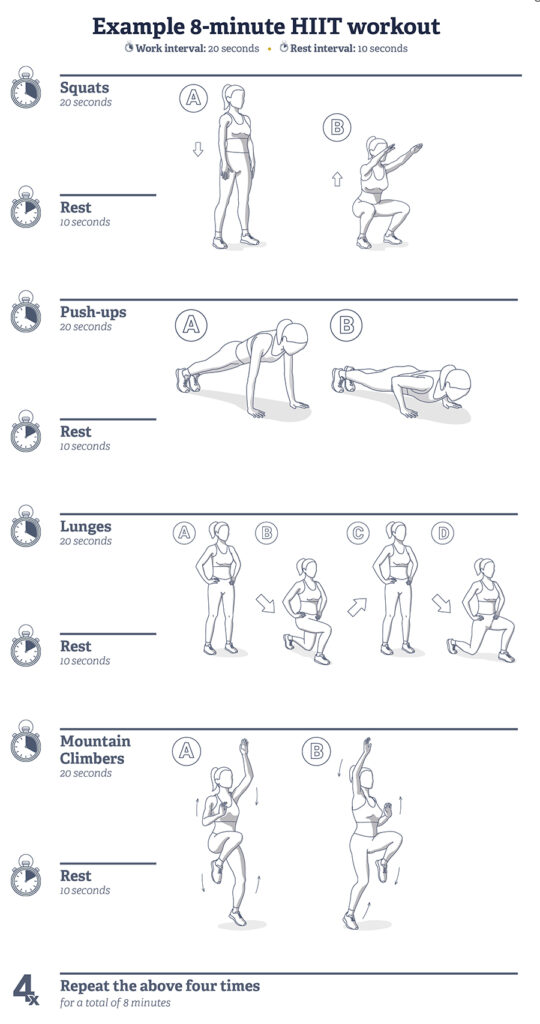
Bodyweight HIIT uses exercises like squats, push-ups, and burpees, making it ideal for at-home workouts. These exercises are easy to perform and require no equipment.
Equipment-Based HIIT
Involving items like kettlebells, dumbbells, and resistance bands, equipment-based HIIT can provide added resistance and intensity to your workout.
Cardio HIIT
Cardio HIIT features exercises like sprinting, cycling, or rowing. These options are excellent for those looking to improve their cardiovascular health.
Strength HIIT
Combining strength training and HIIT, this type focuses on lifting weights at high intensities. It helps improve both cardiovascular endurance and muscle strength.
Benefits of HIIT Workouts
The advantages of HIIT workouts go far beyond just weight loss. Here are some key benefits:
Improved Cardiovascular Health
Regular HIIT sessions can help lower blood pressure and improve overall heart health. The high-intensity intervals force your heart to work harder, strengthening it over time.
Increased Metabolic Rate
Thanks to the afterburn effect, your metabolic rate remains elevated for hours after a HIIT workout. This means you’ll continue to burn calories, even while resting.
Enhanced Athletic Performance
HIIT workouts can improve your endurance, speed, and strength, making you a more rounded athlete. The varied intensity levels help to build overall fitness more effectively than steady-state cardio.
Better Muscle Definition
Because HIIT often incorporates strength training, it can help tone and define your muscles. The burst of intense activity combined with resistance training promotes muscle growth.
Flexibility and Convenience
You don’t need a lot of time or equipment to do a HIIT workout. Its flexibility makes it easy to fit into a busy schedule.

How to Get Started with HIIT
Getting started with HIIT is simpler than you might think. Here are some steps to guide you through your initial workouts:
Consult a Professional
Before beginning any new exercise regimen, it’s crucial to consult with a healthcare or fitness professional to ensure it’s safe for you.
Start Slowly
If you’re new to HIIT, it’s essential to start slowly and build up your intensity and duration over time. A typical beginner workout might last 10 to 15 minutes.
Choose Your Exercises
Select exercises that target different muscle groups for a balanced workout. You can mix and match bodyweight, cardio, and strength exercises to keep things interesting.
Warm-Up and Cool Down
Never skip your warm-up and cool-down. These are crucial for preparing your body for the workout and aiding in recovery afterward.
Track Your Progress
Keep a record of your workouts, noting the exercises, duration, and intensity. This will help you monitor your progress and make necessary adjustments to your routine.
Sample HIIT Workouts for Beginners and Advanced Levels
It’s helpful to start with a structured plan. Here are sample workouts suitable for different fitness levels:
Beginner HIIT Workout
| Exercise | Duration | Rest |
|---|---|---|
| Jumping Jacks | 30 secs | 30 secs |
| Bodyweight Squats | 30 secs | 30 secs |
| Push-Ups | 30 secs | 30 secs |
| High Knees | 30 secs | 30 secs |
| Plank | 30 secs | 30 secs |
Repeat the circuit 2-3 times for a complete workout.
Advanced HIIT Workout
| Exercise | Duration | Rest |
|---|---|---|
| Burpees | 40 secs | 20 secs |
| Kettlebell Swings | 40 secs | 20 secs |
| Box Jumps | 40 secs | 20 secs |
| Mountain Climbers | 40 secs | 20 secs |
| Dumbbell Thrusters | 40 secs | 20 secs |
Repeat the circuit 4-5 times for a more challenging session.

Common Mistakes to Avoid
While HIIT offers numerous benefits, it’s crucial to avoid common mistakes that can hinder your progress or lead to injury.
Skipping Warm-Ups and Cool-Downs
Warm-ups prepare your body for intense activity, and cool-downs help with recovery. Neglecting these can increase the risk of injury.
Overtraining
HIIT is intense by nature, and doing it too frequently can lead to overtraining. Ensure you have rest days to allow your body to recover.
Poor Form
Using improper form during exercises can lead to injury. Focus on quality over quantity and consider consulting a personal trainer to get you started.
Not Listening to Your Body
Pushing through pain or fatigue can be detrimental. Listen to your body and modify exercises as needed.
Modifying HIIT for Special Populations
HIIT is incredibly versatile and can be adapted for various fitness levels, including special populations such as seniors, pregnant women, and those with injuries.
Seniors
For seniors, HIIT can be modified to a lower impact version, incorporating exercises like seated marches, gentle squats, and resistance band exercises.
Pregnant Women
Pregnant women should consult their healthcare provider before starting HIIT. Low-impact exercises, longer rest periods, and avoiding certain positions (like lying flat) can make HIIT safe during pregnancy.
Individuals with Injuries
For those recovering from an injury, HIIT workouts should be approved by a medical professional. Low-impact exercises and careful monitoring can make HIIT a part of their rehabilitation process.

Tracking Your Progress
Monitoring your progress is crucial for long-term success. Here are some effective ways to track your HIIT journey:
Fitness Apps
Numerous fitness apps can help you record your workouts, track calories burned, and monitor your progress.
Journals
Keeping a fitness journal allows you to document your workouts, note how you feel, and track improvements over time.
Wearable Technology
Fitness trackers and smartwatches can provide real-time data on your heart rate, calorie burn, and overall performance.
FAQs About HIIT
How Often Should You Do HIIT?
For most people, 3-4 sessions a week are sufficient. This allows time for recovery while still reaping the benefits of HIIT.
Can You Do HIIT Every Day?
While it might be tempting, doing HIIT every day is not recommended due to the high-intensity nature of the workouts. Your body needs adequate time to recover.
What should you eat before and after a HIIT session?
-
Before: A small meal with carbohydrates and protein—such as a banana with peanut butter—can provide energy.
-
After: Focus on protein for muscle repair and carbohydrates to replenish glycogen stores, like a protein shake with fruit.

Conclusion
High-Intensity Interval Training (HIIT) is an effective, time-efficient way to improve your fitness levels. Whether you’re just starting out or looking to ramp up your current routine, HIIT offers a versatile and adaptable workout option. With its myriad of benefits, from improved cardiovascular health to increased metabolic rate, it’s no wonder HIIT has become a go-to workout for so many.
Remember to listen to your body, start slowly, and consult a professional if you’re new to this type of exercise. By incorporating HIIT into your fitness routine, you’ll be well on your way to achieving your health and fitness goals.