
Do you often find yourself swamped with work, family commitments, and endless to-do lists, wondering how on earth you can fit a fitness routine into your day? You’re not alone. Many people struggle to maintain a healthy and active lifestyle when their schedules are jam-packed. The good news is, it’s entirely possible to make time for fitness, even with a busy schedule. This guide will provide you with practical tips and strategies to seamlessly integrate exercise into your daily life.
Understanding the Importance of Fitness
Before we jump into the how-tos, it’s crucial to recognize why fitness should be a priority. Regular physical activity boosts your energy levels, enhances your mood, and improves overall health. It reduces the risk of chronic diseases such as heart disease, diabetes, and certain cancers. Moreover, exercise can be a great stress-reliever, making you more productive and better equipped to handle your busy lifestyle.
Assess Your Current Schedule
Start by taking a good look at your current schedule. Are there pockets of time that you could repurpose for physical activity? Track your daily activities for a week to get a clear picture of how you spend your time. You might be surprised to find more opportunities than you initially thought.
Identifying Time Wasters
We all have activities that consume more time than they should. Whether it’s scrolling through social media, binge-watching TV shows, or engaging in lengthy phone conversations, pinpoint these time wasters and consider how you can reduce or eliminate them.
Using a Time-Tracking Table
Creating a table can be an effective way to identify time-wasting activities and see where adjustments can be made.
| Activity | Estimated Time Per Day (hrs) | Potential Time Reallocation for Fitness (hrs) |
|---|---|---|
| Social Media | 2 | 1 |
| TV | 3 | 1.5 |
| Non-urgent Emails | 1 | 0.5 |
| Total Time Reallocated for Fitness | 3 |

Setting Realistic Fitness Goals
Define Your Objectives
What do you hope to achieve with your fitness routine? Whether it’s weight loss, building muscle, improving cardiovascular health, or simply staying active, it’s important to set clear and realistic goals. Write them down and keep them visible to stay motivated.
Break Down Your Goals
Instead of setting vague objectives, break your goals down into specific and manageable tasks. For example, if your goal is to lose weight, aim to lose 1-2 pounds per week. If you want to run a 5k, start with a plan to gradually increase your running distance over the course of several weeks.
Incorporating Fitness into Your Daily Routine
Morning Workouts
One of the most effective ways to ensure you don’t skip your workout is to do it first thing in the morning. It sets a positive tone for the day and guarantees that other commitments won’t interfere.
Lunchtime Workouts
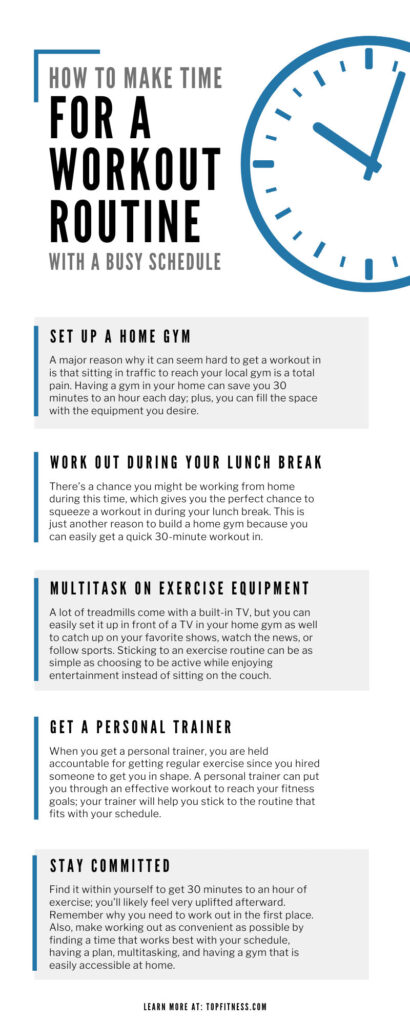
Make the most of your lunch break by fitting in a quick workout. It could be a brisk walk, a workout class at a nearby gym, or even a short run. This can also help you return to work feeling refreshed and more focused.
Evening Workouts
If mornings are too hectic, schedule your workout for the evening. While it might not be the ideal time for everyone, exercising after work can help you unwind and de-stress.
Utilize Short Breaks
Even during a busy day, you can find short breaks to fit in some exercise. A 10-minute stretching session or a quick set of push-ups can make a big difference.
Joining a Gym or Fitness Center
Choosing the Right Gym
If you decide to join a gym, select one that is conveniently located near your home or workplace. This will make it easier to fit in a workout on your way to or from work, or even during lunch breaks.
Group Classes
Group fitness classes can be a fun and motivating way to stay active. Plus, they are usually scheduled at specific times, which can help you stick to your fitness routine.
Home Workouts
Benefits of Exercising at Home
Home workouts offer flexibility and convenience. You can fit them into your schedule without needing to travel to a gym, and they’re perfect for short, high-intensity workouts.
Creating a Home Workout Space
Designate a space in your home for exercising. It doesn’t need to be big; even a corner of a room can suffice. Equip it with some basic workout gear like a yoga mat, dumbbells, and resistance bands.
Online Resources
Utilize online workout videos and apps that cater to all fitness levels. Many of these resources offer free or low-cost options, providing guided workouts that can be done at home.

Leveraging Technology
Fitness Apps
There are countless fitness apps available that can help you design and track your workouts. Some popular options include MyFitnessPal, Fitbod, and Nike Training Club.
Wearable Technology
Devices like fitness trackers or smartwatches can help you monitor your activity levels, set goals, and stay accountable.
Online Communities
Join online fitness communities or forums for motivation, support, and advice. Sharing your progress with others can help keep you accountable and inspired.
Making Fitness a Family Affair
Family Workouts
Involve your family in your fitness routine. Go for bike rides, play sports, or take walks together. It’s a great way to spend quality time while staying active.
Setting a Healthy Example
By prioritizing fitness, you set a positive example for your children. This can instill a lifelong habit of physical activity in them.

Staying Motivated
Track Your Progress
Keep a record of your workouts and any changes in your fitness levels. This can be incredibly motivating and help you see how far you’ve come.
Reward Yourself
Set milestones and reward yourself when you reach them. It could be a new piece of workout gear, a massage, or a fun outing.
Find a Workout Buddy
Having a workout buddy can make exercising more enjoyable and keep you accountable.
Dealing with Setbacks
Expect the Unexpected
Life happens, and sometimes your schedule will get disrupted. Accept that there will be days when you won’t be able to stick to your plan and don’t let it discourage you.
Flexible Plans
Have a backup plan for days when your schedule gets thrown off. This could be a shorter workout or a different type of exercise that you can do at home.
Evaluating and Adjusting Your Routine
Regular Review
Periodically evaluate your fitness routine to see what’s working and what isn’t. Adjust your goals and plans accordingly.
Staying Adaptable
Your schedule will inevitably change over time, and so will your fitness needs. Stay adaptable and willing to modify your routine to suit your current situation.
Final Thoughts
Finding time for fitness in a busy schedule may seem challenging, but with a bit of planning and dedication, it’s entirely achievable. Assess your current schedule, set realistic goals, and explore various ways to incorporate exercise into your daily life. Remember, consistency is key, and every bit of effort you put into your fitness journey will bring you closer to a healthier and more balanced lifestyle. So why not start today? Your future self will thank you.