
Have you ever wondered if you’re taking the best care of your fitness equipment? Proper maintenance can significantly extend the life of your machines and ensure they function effectively. Owning fitness equipment, whether a personal treadmill or a set of complex gym machines, requires attention to detail and consistent upkeep. Let’s walk through the steps you need to maintain and care for your fitness equipment to keep it in top shape.
Why Proper Maintenance Matters
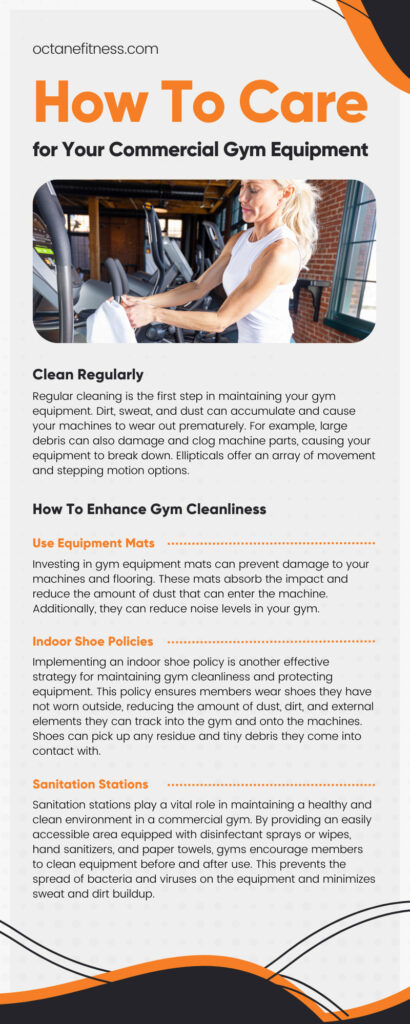
Taking the time to care for your fitness equipment is not just about keeping it looking new; it’s essential for safety and longevity. Regular maintenance prevents wear and tear, reduces the risk of injury, and ensures that each workout session is as effective as possible.
Benefits of Regular Maintenance
- Longevity: Regular care helps extend the lifespan of your equipment.
- Performance: Well-maintained machines ensure a smoother and safer workout.
- Safety: Reduces the risk of malfunctions that could cause injuries.
- Cost-Efficiency: Avoid frequent repairs and replacements.
General Maintenance Tips
There are a few key practices applicable to most types of fitness equipment. Let’s look at some of the general maintenance tasks you should be aware of.
Cleaning
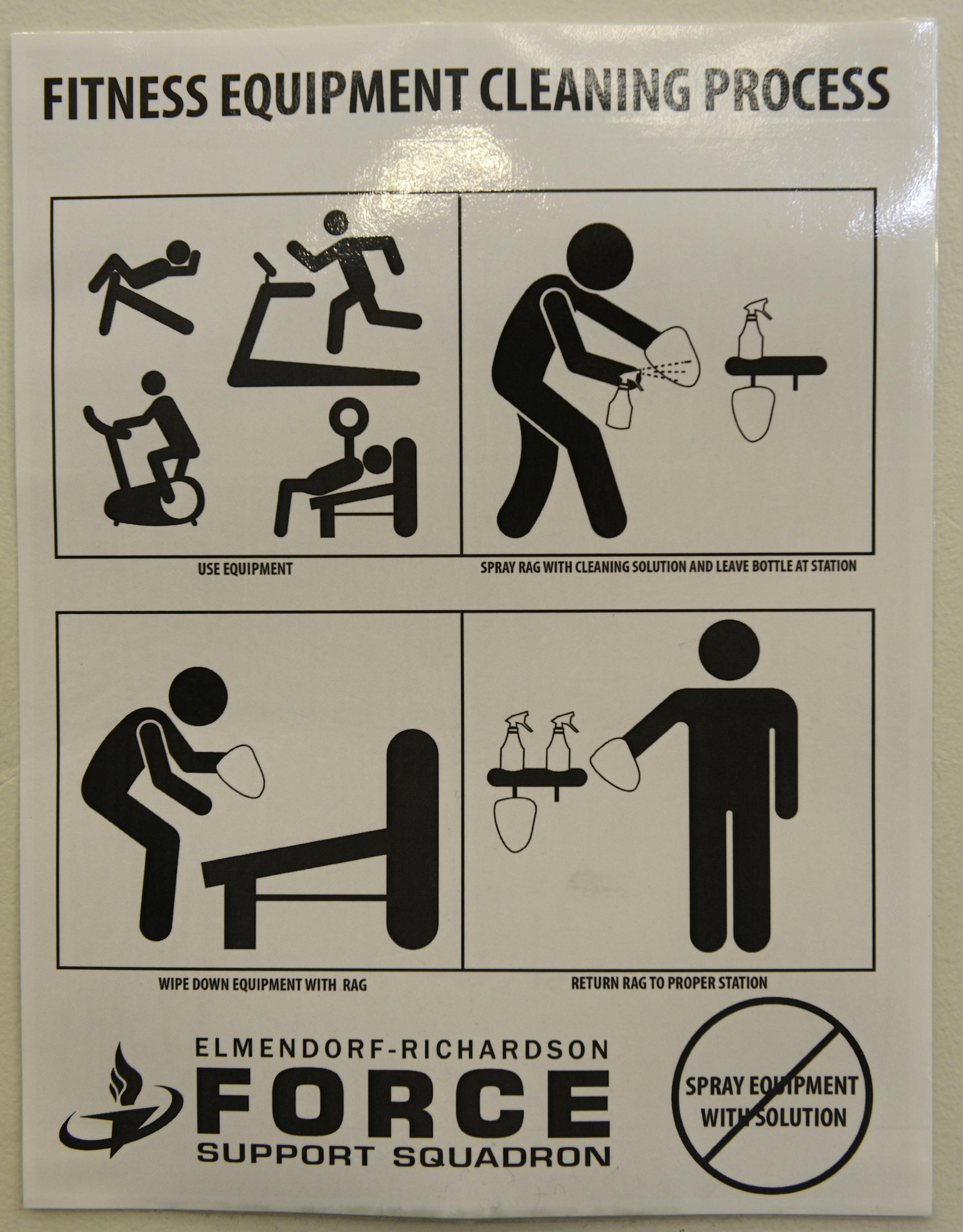
Clean your equipment after each use. Sweat can be corrosive and harbor bacteria, making cleaning a critical step in your maintenance routine.
| Equipment | Cleaning Frequency | Cleaning Method |
|---|---|---|
| Treadmills | After every use | Wipe down with a damp cloth and mild detergent. |
| Free Weights | Weekly | Clean with disinfectant wipes. |
| Yoga Mats | After every use | Wipe down with a mixture of water and white vinegar. |
| Elliptical Machines | Weekly | Use a damp cloth to clean the console and frame; avoid soaking. |
Lubrication
Lubrication helps reduce friction in moving parts and is vital for machines like treadmills and exercise bikes.
- Treadmills: Lubricate the belt every 3-6 months, depending on usage.
- Exercise Bikes: Check manufacturer’s guidelines, but generally, a few drops of oil on the chain bi-monthly will suffice.
- Weight Machines: Lubricate all pivot points and joints monthly.
Inspection
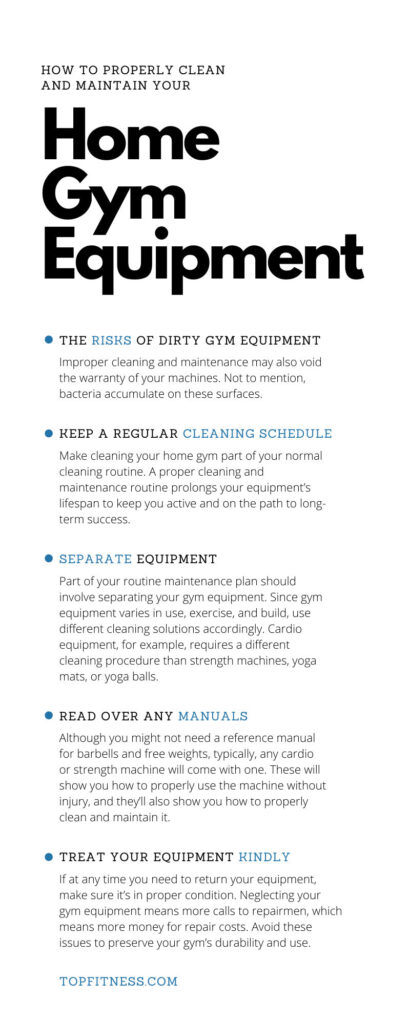
Regularly inspect your equipment for loose bolts, frayed cables, or other signs of wear and tear.
- Monthly Checks: Look for loose bolts, nuts, and screws.
- Quarterly Checks: Check cables and belts for fraying or cracks.
- Annual Checks: Consider having a professional inspection.
Specific Equipment Maintenance
Different types of fitness equipment have unique maintenance needs. Here we detail the care guidelines for some common pieces.
Treadmills
Treadmills are a staple in many home gyms and require specific care to maintain optimal functionality.
Cleaning:
- Wipe down the console, handles, and belt after each use.
- Vacuum under and around the treadmill weekly to prevent dust buildup.
Belt Alignment and Tension:
- Check the belt alignment monthly. If the belt is not centered, use the adjustment bolts to correct it.
- Ensure the belt is properly tensioned to avoid slippage. You should be able to lift the belt about 2-3 inches on the side.
Lubrication:
- Apply lubricant under the walking belt every 3-6 months.
- Follow the manufacturer’s recommendations for the type of lubricant.
Electrical Checks:
- Periodically inspect the power cord for damage.
- Ensure the treadmill is plugged into a surge protector.
Exercise Bikes
Exercise bikes are another popular piece of cardio equipment that benefits from regular maintenance.
Cleaning:
- Wipe down all surfaces after each use.
- Use a damp cloth to clean handle grips and seats weekly.
Adjustments:
- Check and adjust the seat and handlebar positions monthly to ensure they lock into place securely.
- Test the pedal clips and straps for wear and replace them if necessary.
Lubrication:
- Apply lubricant to the chain every few months, or as recommended by the manufacturer.
- Use a silicone spray on moving parts to keep the bike in top condition.
Belt and Chain Check:
- Inspect the drive belt or chain for signs of wear or damage monthly.
- Replace the belt or chain if there are any indications of fraying or weakening.
Elliptical Machines
Elliptical machines provide a low-impact workout but require regular care to maintain smooth operation.
Cleaning:
- Wipe down the display, handles, and pedals after each use.
- Use a vacuum to clean around and under the machine to prevent dust from entering the mechanical parts.
Lubrication:
- Lubricate the pivot points and rails according to the manufacturer’s instructions, usually every 6 months.
Inspection:
- Monthly, check the bolts and screws to ensure they are tight.
- Inspect the electrical wiring for signs of wear and tear.
Foot Pedals:
- Check the foot pedals for stability and wear once a month.
- Replace any worn-out pedal coverings to maintain foot grip and safety.
Free Weights and Benches
Free weights and benches might seem straightforward, but they also benefit from proper care.
Cleaning:
- Wipe down dumbbells, kettlebells, and benches after each use.
- Use an anti-bacterial spray to prevent the spread of germs.
Inspection:
- Check the condition of the weights for any sign of rust or dents.
- Ensure weight clips and collars are secure.
Storage:
- Store weights on a rack to keep them off the ground and prevent damage.
- Avoid storing weights in humid places to prevent rust.
Benches:
- Tighten the bolts and screws on benches monthly.
- Check the cushioning for tears or wear and replace if necessary.
Yoga Mats and Accessories
Yoga mats and related accessories need regular cleaning and care to remain hygienic and comfortable.
Cleaning:
- Wipe down with a mixture of water and mild soap or a specialized yoga mat cleaner after each use.
- Allow the mat to dry completely before rolling it up.
Inspection:
- Check for any tears or signs of wear monthly.
- Replace the mat if it loses its grip or cushioning.
Storage:
- Store yoga mats rolled up in a cool, dry place.
- Avoid prolonged exposure to direct sunlight to prevent material degradation.
Advanced Equipment Maintenance
For those with more sophisticated home gyms featuring advanced equipment, additional steps might be necessary.
Rowing Machines
Rowing machines are fantastic for a full-body workout but have specific maintenance needs.
Cleaning:
- Wipe down the handle, seat, and rail after each use.
- Clean the flywheel casing monthly to reduce dust buildup.
Lubrication:
- Apply oil to the chain every 50 hours of use.
- Use a silicone spray on the seat rails as needed to ensure smooth gliding.
Inspection:
- Check the chain for rust or kinks every few weeks.
- Ensure the foot straps and seat mechanisms are securely fastened.
Multi-Gym Stations
Multi-gym stations offer various exercises but require meticulous upkeep to maintain their diverse components.
Cleaning:
- Wipe down the bench, handles, and pulleys after use.
- Clean the weight stack and guide rods with a damp cloth monthly.
Lubrication:
- Lubricate the guide rods and pulleys with a silicone spray every few months.
- Ensure the cables move smoothly by applying lubricant as per the manufacturer’s instructions.
Inspection:
- Examine the cables and pulleys for fraying or wear monthly.
- Tighten all bolts and screws quarterly to ensure stability.
Maintaining Electronic Components
Most modern fitness equipment comes with electronic displays and controls that need proper care.
Cleaning:
- Use a soft cloth and a mild cleaning solution to wipe down screens.
- Avoid using abrasive materials that might scratch the displays.
Software Updates:
- Regularly check for firmware updates from the manufacturer to ensure your equipment is running the latest version.
Battery Check:
- For battery-operated equipment, check the battery life periodically and replace them if necessary.
- Be cautious to avoid battery corrosion by removing them if the device won’t be used for extended periods.
Common Mistakes to Avoid
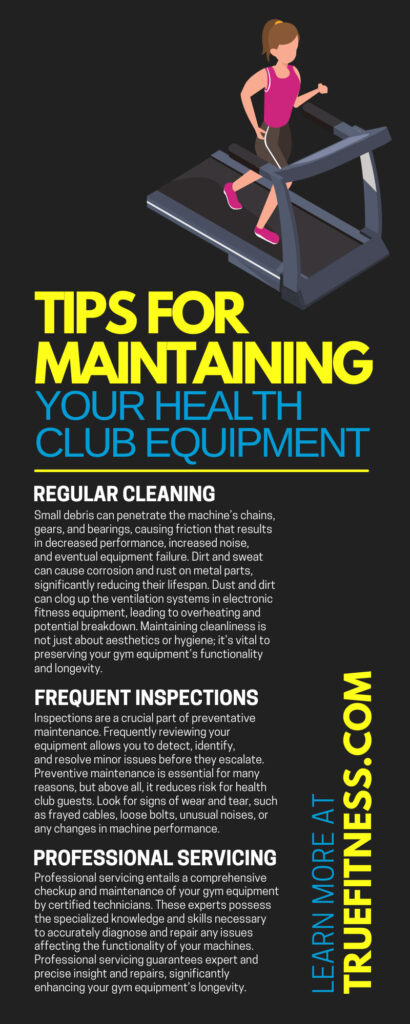
Even with the best intentions, it’s easy to make mistakes in equipment maintenance. Here are common pitfalls and how to avoid them.
Over-Lubrication
While lubrication is vital, overdoing it can cause slippage or attract more dust and dirt.
Ignoring Manufacturer’s Instructions
Each piece of equipment comes with a user manual for a reason. Ignoring these guidelines can lead to improper care and potential damage.
Skipping Regular Checks
Neglecting regular inspections can turn minor issues into significant problems, often leading to costly repairs.
Using Harsh Chemicals
Using harsh cleaning agents can damage the fragile parts of your equipment. Stick to mild, manufacturer-recommended cleaning solutions.
Creating a Maintenance Schedule
To ensure you’re on track with maintenance, creating a schedule can be immensely helpful.
Weekly:
- Wipe down all surfaces.
- Vacuum around the equipment.
Monthly:
- Inspect bolts and screws.
- Check for wear and tear.
Quarterly:
- Lubricate appropriate parts.
- Deep clean equipment.
Annually:
- Professional inspection if needed.
- Replace worn-out parts.
| Task | Frequency |
|---|---|
| Wipe down surfaces | Weekly |
| Vacuum area | Weekly |
| Inspect bolts/screws | Monthly |
| Check for wear/tear | Monthly |
| Lubricate parts | Quarterly |
| Deep clean | Quarterly |
| Professional inspection | Annually |
| Replace parts | Annually or as needed |
Conclusion
Properly maintaining and caring for your fitness equipment isn’t just about keeping it looking good; it’s essential for performance, safety, and longevity. With regular cleaning, lubrication, and inspections, you can ensure your equipment remains in top condition. Establishing a consistent maintenance schedule will not only safeguard your investment but also provide you with a safer and more enjoyable workout experience. So take the time to care for your equipment, and it will certainly take care of you.
Remember, a little effort goes a long way in maintaining the efficiency and lifespan of your fitness gear. Stay proactive, and you’ll reap the rewards.