
Have you ever wondered how you could create a home gym even if you’re short on space and working with a tight budget? Building a home gym is an excellent way to maintain your fitness routine without the hassle of traveling to a commercial gym. It’s not just about convenience; it can also be cost-effective and personalized to meet your specific needs. Let’s walk through the process of setting up a home gym that fits within your space constraints and budget.
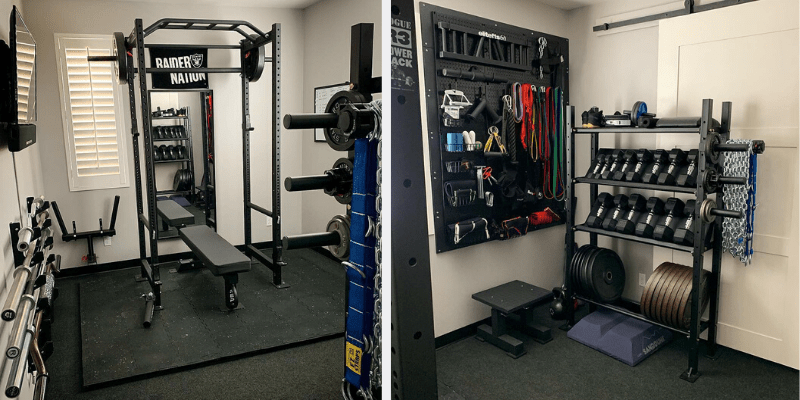
Why Set Up a Home Gym?
Convenience
Imagine waking up and being just a few steps away from your workout area. No need to drive, find parking, or wait for equipment to be free. A home gym takes away all these inconveniences and makes it easier to stick to your fitness routine.
Cost-Effectiveness
Monthly gym memberships can quickly add up. By investing in your own equipment upfront, you can save money in the long run. Additionally, you have the flexibility to purchase only what you need.
Customization
With a home gym, you’re in control. You get to decide the type of equipment, layout, and environment. Whether you prefer yoga, weightlifting, or cardio, your gym can reflect your fitness style.
Assess Your Space
Available Space
First, look around your home to identify where you can set up your gym. This could be a corner of your living room, a part of your garage, or even a spare bedroom. It’s crucial to measure the area to know exactly how much space you have to work with.
Possible Adjustments
Sometimes, you can make small adjustments to maximize your available space. For instance, could you move some furniture or use a foldable bench that can be stored when not in use? Flexibility is key.
Space Considerations for Different Activities
Here’s a quick reference to help you understand space requirements for various types of workouts:
| Activity | Space Required | Notes |
|---|---|---|
| Yoga | 6′ x 6′ | A yoga mat and a little extra room for stretching. |
| Weightlifting | 8′ x 8′ | Enough room for weights and a bench. |
| Cardio | 10′ x 10′ | Space for a treadmill, bike, or other equipment. |
| Bodyweight | 6′ x 6′ | Minimal space, as you mainly use your body. |
Budget Considerations
Determine Your Budget
Before purchasing any equipment, decide how much you’re willing to spend. Having a clear budget will help you prioritize your needs and avoid unnecessary expenses.
Choose Cost-Effective Alternatives
There are plenty of affordable alternatives to expensive gym equipment. For example, resistance bands can substitute for weights, and a jump rope can replace a cardio machine. Shop around for the best deals and consider second-hand options.
Essential Equipment on a Budget
Dumbbells
Dumbbells are incredibly versatile and relatively inexpensive. You can perform a wide range of exercises with them, and they don’t take up much space.
Resistance Bands
Resistance bands are another fantastic option for strength training. They are portable, affordable, and offer various resistance levels.
Jump Rope
A jump rope is great for cardio, and it’s extremely budget-friendly. Plus, it takes up almost no space.
Stability Ball
Also known as a Swiss ball, a stability ball can be used for core exercises, stretching, and even as a bench for weightlifting.
Yoga Mat
A yoga mat is essential for floor exercises, stretching, and yoga routines. It’s a small investment that can make a big difference in your comfort during workouts.
Creating a Functional Layout
Zoning Your Space
Break your gym area into zones based on the types of workouts you plan to do. For example, have a section for cardio, one for strength training, and another for stretching or yoga.
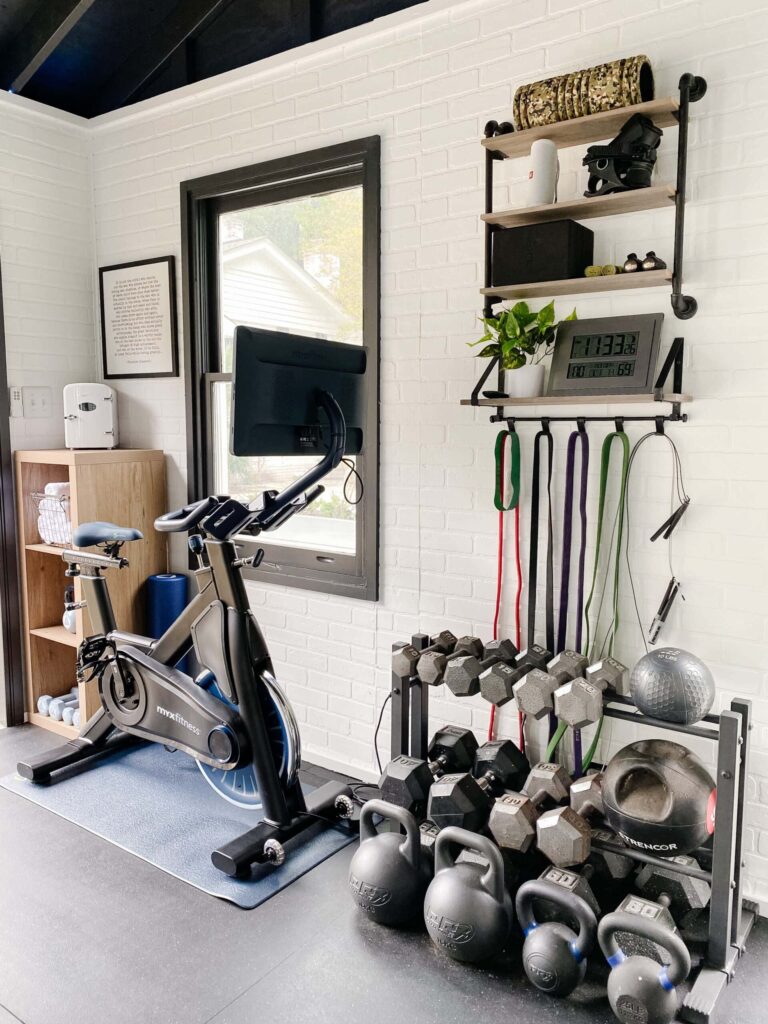
Storage Solutions
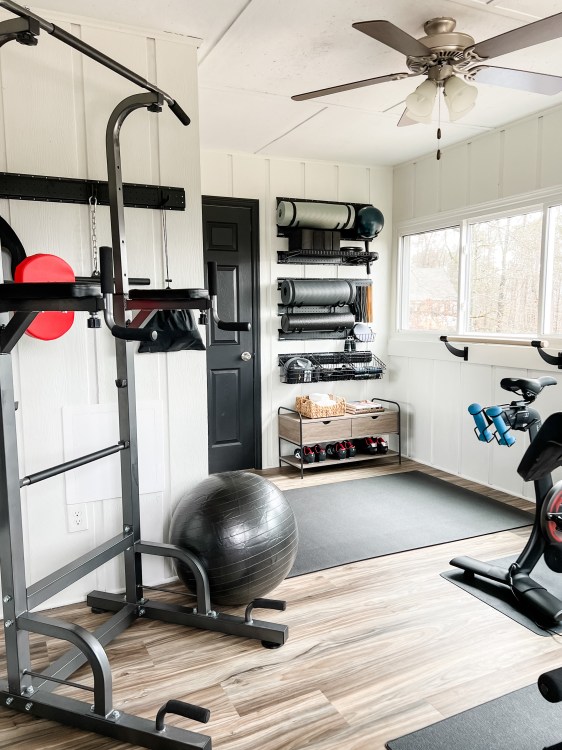
Use storage solutions to keep your area organized. Wall-mounted racks, shelves, and storage bins can help keep equipment out of the way when not in use. Foldable or multi-purpose equipment can also save space.
Safety Considerations
Ensure that your space is safe by keeping the floor clutter-free, securing heavy equipment, and using non-slip mats. Proper ventilation and lighting are also essential for a comfortable workout environment.
Sample Home Gym Layouts
Here are a couple of sample layouts for different spaces:
Small Space Example
If you’re working with a very limited space, such as a corner of a room:
- Dumbbells: Place them under a small table.
- Resistance Bands: Hang them on a wall hook.
- Yoga Mat: Roll it up and store it in a corner.
- Jump Rope: Keep it in a small drawer or basket.
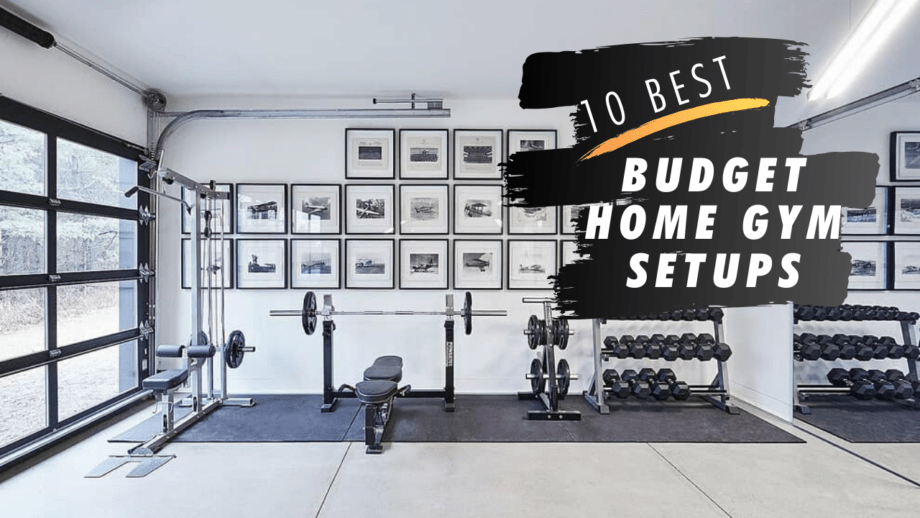
Garage Example
If you have a bit more space, like part of a garage:
- Weight Bench: Place it against the wall.
- Free Weights Rack: Next to the bench.
- Cardio Equipment: Tuck a bike or treadmill in the opposite corner.
- Storage Solutions: Use wall-mounted racks for resistance bands, jump ropes, and other small equipment.
Creating a Routine
Setting Goals
Define what you want to achieve with your home gym. Do you want to lose weight, build muscle, improve cardiovascular health, or simply stay active?
Designing Workouts
Design your workouts based on your goals. Here’s an example of a weekly routine:
| Day | Workout Type | Details |
|---|---|---|
| Monday | Strength Training | Dumbbells and resistance bands |
| Tuesday | Cardio | Jump rope or a bike workout |
| Wednesday | Flexibility | Yoga or stretching |
| Thursday | Strength Training | Dumbbells and resistance bands |
| Friday | Cardio | Jump rope or a bike workout |
| Saturday | Active Recovery | Light stretching or a walk |
| Sunday | Rest | Take the day off to recover |
Staying Motivated
Staying motivated can be a challenge. Set specific, achievable goals and track your progress. Keep your workouts varied to prevent boredom. Additionally, creating a dedicated workout time can help it become a habit.
Affordable Additions to Enhance Your Home Gym
Kettlebells
Kettlebells are versatile and can add variety to your strength training routine. You don’t need a whole set; just one or two of different weights will do.
Foam Roller
A foam roller is excellent for recovery. It can help relieve muscle soreness and improve flexibility.
Pull-Up Bar
If you have a doorway, a pull-up bar is an inexpensive addition that can significantly enhance your strength training.
Medicine Ball
A medicine ball can be used for various exercises and is relatively affordable. It’s great for adding intensity to your core workouts.
Adjustable Bench
An adjustable bench can replace a flat bench and offer more variety. It’s worth the investment if you’re serious about weight training.
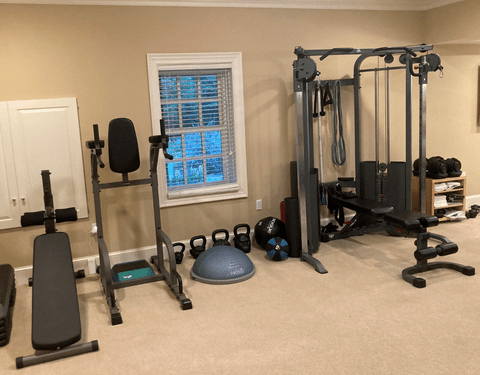
Making the Most of Limited Space
Compact Equipment
Consider equipment that is compact or foldable. For instance, a foldable treadmill can be stored away easily. Adjustable dumbbells save space compared to having multiple sets.
Multi-Functional Equipment
Look for multi-functional equipment, such as a stability ball, which can be used for various exercises, or power towers that incorporate different workout stations.
Vertical Storage
Use vertical space by installing wall-mounted racks or shelves for your equipment. This can keep your floor area clear and make your gym look more organized.
DIY Solutions
Homemade Weights
You can use items like water bottles, sandbags, or even backpacks filled with books as weights. These are great temporary solutions if you’re on a very tight budget.
DIY Pull-Up Bar
With some basic tools and materials, you can install your own pull-up bar. There are many online tutorials that can guide you through the process.
Incorporating Technology
Fitness Apps
There are numerous fitness apps available that can provide you with workout routines, track your progress, and even offer virtual coaching.
Online Workout Videos
YouTube and other platforms offer countless free workout videos. You can find anything from yoga sessions to high-intensity interval training (HIIT) workouts.
Wearable Technology
Fitness trackers can help you monitor your activity levels, heart rate, and more. They can be a great motivational tool.
Long-Term Considerations
Gradual Upgrades
You don’t need to buy everything at once. Start with the essentials and gradually add more equipment as your budget allows and your fitness needs evolve.
Equipment Maintenance
Taking good care of your equipment will extend its lifespan. Clean it regularly, check for any wear and tear, and follow the manufacturer’s maintenance recommendations.
Evolving Your Workout Space
As you become more committed to your workouts, you might find that your needs change. Be flexible and willing to adjust your setup to keep it functional and motivating.
Conclusion
Setting up a home gym with limited space and budget is absolutely achievable. By assessing your available space, setting a clear budget, and carefully selecting versatile and cost-effective equipment, you can create a workout environment tailored to your needs. Remember, the key is to start small and gradually expand. Your fitness journey is unique, and your home gym should reflect that. Enjoy creating a space that will help you stay healthy and active, all from the comfort of your home.