
Have you ever wondered how you can take your workouts to the next level with something as simple as a suspension trainer? Suspension trainers are versatile, portable, and highly effective tools that can enhance your fitness routine. They allow you to use your body weight to perform a variety of exercises aimed at working out almost every muscle group. But knowing the best ways to use a suspension trainer can make all the difference in achieving your fitness goals.

What is a Suspension Trainer?
A suspension trainer is essentially a set of adjustable straps designed to leverage your body weight for resistance training. The TRX system is one of the most well-known brands, but many other types exist. These devices can be anchored to any sturdy structure, such as a door, pull-up bar, or even a tree. By adjusting the angles and length of the straps, you can create different levels of difficulty, making it accessible for everyone, from beginners to advanced fitness enthusiasts.
Why Use a Suspension Trainer?
Using a suspension trainer offers numerous benefits, including improving balance, strength, and flexibility. One of its unique features is that you are continually required to stabilize your body, engaging your core muscles during every exercise. This leads to functional strength gains that translate well into everyday activities and sports. Moreover, a suspension trainer is lightweight and portable, allowing you to set up an effective workout session anywhere, whether you’re at home, at the gym, or outdoors.

Getting Started: Basic Setup
Before diving into the exercises, it’s essential to set up your suspension trainer correctly.
Choosing an Anchor Point
The first step is to choose a suitable anchor point. This can be anything from a durable door to a sturdy tree branch. Ensure that your anchor point is strong enough to support your body weight.
Adjusting the Straps
Adjusting the straps is crucial to performing exercises correctly and safely. Most suspension trainers come with adjustable buckles that allow you to change the length of the straps. The length of the straps will vary depending on the exercise you’ll be performing, so it’s helpful to familiarize yourself with making these adjustments quickly.
Safety Tips
- Always check the straps and buckles for wear and tear before starting your workout.
- Ensure the anchor point is secure.
- Use appropriate footwear to prevent slipping.
- Maintain proper form to reduce the risk of injury.
Full-Body Exercises Using a Suspension Trainer
Now that you have your suspension trainer set up, it’s time to explore some full-body exercises. These exercises are designed to target multiple muscle groups, giving you a complete workout.
Upper Body Exercises
Suspension Push-ups
Suspension push-ups are an excellent way to work on your chest, shoulders, and triceps.
- Adjust the straps so they are at mid-length.
- Face away from the anchor point and hold the handles with your hands.
- Walk your feet back until your body is at a 45-degree angle.
- Lower your chest toward the floor by bending your elbows.
- Push back up to the starting position.
Tip: Keep your core engaged to maintain a straight body line.
Rows
Rows target your upper back, biceps, and shoulders.
- Adjust the straps to mid-length.
- Face the anchor point and hold the handles.
- Walk your feet in closer to the anchor point, leaning back until your body is at an angle.
- Pull your chest up toward the handles, squeezing your shoulder blades together.
- Lower yourself back to the starting position in a controlled manner.
Variation: To make it harder, walk your feet further in.
Lower Body Exercises
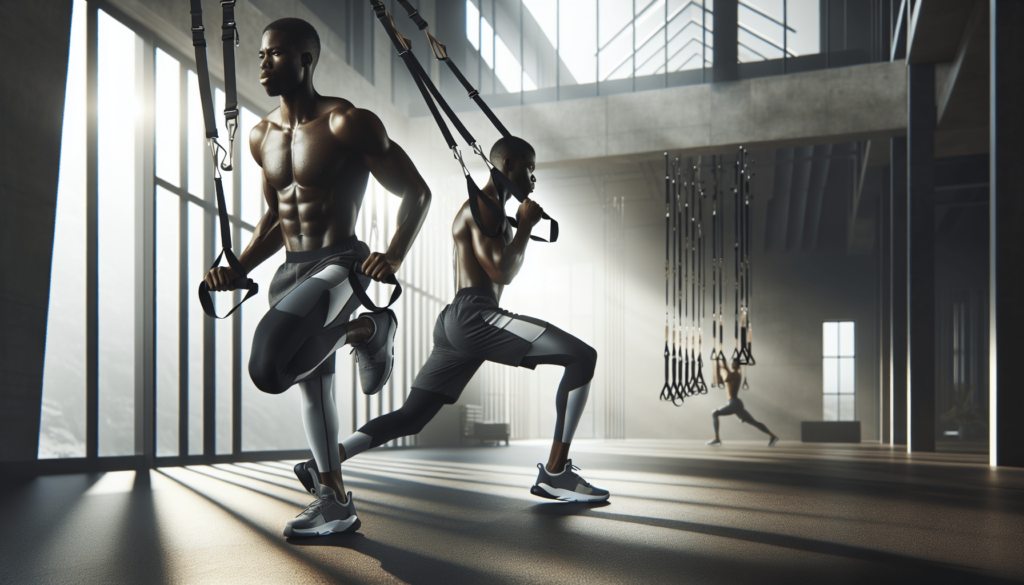
Lunges
Lunges performed with a suspension trainer add an element of instability, which engages additional muscle groups.
- Adjust the straps to mid-calf length.
- Stand facing away from the anchor point and place one foot in the loop.
- Step forward with the other foot into a lunge, lowering your back knee toward the floor.
- Return to the starting position and repeat on the other side.
Tip: Keep your front knee in line with your ankle to avoid strain.
Squats
Suspension squats are great for your quadriceps, hamstrings, and glutes.
- Adjust the straps to mid-length.
- Stand facing the anchor point and hold the handles with both hands.
- Lower your body into a squat position while keeping your chest up and shoulders back.
- Push through your heels to return to the starting position.
Variation: Add a jump at the top of your squat for a plyometric challenge.
Core Exercises
Planks
Planks using a suspension trainer intensify the core engagement.
- Adjust the straps to mid-calf length.
- Face away from the anchor point and place your feet in the loops.
- Assume a plank position with your hands directly under your shoulders.
- Hold this position, keeping your core tight and body in a straight line.
Tip: Start with a regular plank and progress to a side plank for added difficulty.
Mountain Climbers
Mountain climbers are an excellent way to get your heart rate up while working your core.
- Adjust the straps to mid-calf length.
- Face away from the anchor point and place your feet in the loops.
- Assume a plank position.
- Alternately bring your knees to your chest as quickly as you can while maintaining form.
Modification: Slow down the movement if you’re new to this exercise.
Full-Body Moves
Burpees
Burpees in a suspension trainer add a new level of difficulty.
- Adjust the straps to mid-length.
- Face the anchor point and hold the handles.
- Perform a squat, placing your hands on the handles.
- Jump your feet back into a plank, then bring them back in.
- Jump up and reach overhead.
Tip: Keep the movement fluid to maximize its effectiveness.

Pro Tips for Using a Suspension Trainer
Focusing on Form
Maintaining proper form is crucial when using a suspension trainer. This not only ensures you get the most out of each exercise but also minimizes the risk of injury. Here are some tips to help you stay on track:
- Engage Your Core: Keeping your core tight will help you maintain good form.
- Controlled Movements: Avoid jerky movements; control your exercises.
- Breathing: Exhale during the hard part of the exercise, and inhale during the easier part.
Progressions and Regressions
One of the best aspects of suspension training is the ability to easily modify exercises to match your fitness level. Here are ways to either progress or regress certain exercises:
To Make an Exercise Harder:
- Increase the angle to make your body more parallel to the floor.
- Add instability by lifting one limb.
- Perform the exercise slower to increase the time under tension.
To Make an Exercise Easier:
- Decrease the angle to make your body more upright.
- Perform the exercise with your feet further apart to increase stability.
- Use a slower tempo to focus on form rather than speed.
Creating a Suspension Trainer Workout Routine
A well-rounded workout routine with a suspension trainer will include exercises targeting all major muscle groups. Here’s a sample full-body workout you can follow:
Sample Workout Routine
Warm-up:
- 5 minutes of light cardio (jumping jacks, high knees)
Workout:
| Exercise | Sets | Reps |
|---|---|---|
| Suspension Push-ups | 3 | 10-15 |
| Rows | 3 | 10-15 |
| Lunges | 3 | 10-12 per leg |
| Squats | 3 | 15-20 |
| Planks | 3 | 30-60s hold |
| Mountain Climbers | 3 | 15-20 per leg |
| Burpees | 3 | 10-12 |
Cool-down:
- 5 minutes of stretching, focusing on the muscle groups worked.
Tips for Effective Workouts
- Consistency: Aim to perform suspension training workouts at least 2-3 times per week.
- Rest: Give yourself 48 hours of rest between full-body workouts to allow muscles to recover.
- Hydrate: Drink plenty of water before, during, and after your workout.
Troubleshooting Common Issues
Using a suspension trainer can come with its challenges. Here are some common issues and how to address them:
Slipping Straps
If you find that your straps are slipping, double-check the buckles and ensure they are secure. Sometimes, using a knot can help to keep them in place.
Poor Form
Maintain a mirror or record yourself to identify if you’re losing form. Sometimes, focusing too much on the number of reps can lead to sacrifices in form. Quality over quantity is essential.
Anchor Point Issues
Always check the sturdiness of your anchor point before beginning your workout. If you’re using a door, make sure it is properly closed and locked.
Lack of Motivation
Set specific, achievable goals and track your progress to keep your motivation levels up. Having a workout buddy can also make a big difference in staying committed.
Frequently Asked Questions
Can Beginners Use a Suspension Trainer?
Absolutely! One of the key strengths of a suspension trainer is its adaptability to any fitness level. Beginners should focus on mastering form and can modify exercises to be less challenging by adjusting the angle and position.
How Long Should My Suspension Trainer Workout Be?
A typical full-body suspension trainer workout can range from 30 to 45 minutes, including warm-up and cool-down periods. Adjust the length based on your fitness level and goals.
Are Suspension Trainers Safe?
Suspension trainers are safe when used correctly. Always ensure your anchor point is secure, check your equipment for any signs of damage, and maintain proper form to minimize the risk of injury.
Can You Build Muscle with a Suspension Trainer?
Yes, you can build muscle using a suspension trainer. The constant tension and instability created by the straps make exercises more challenging, effectively working your muscles.
Where Can I Use My Suspension Trainer?
The beauty of a suspension trainer is its portability. You can use it at home, in a gym, at a park, or when traveling. Just ensure you have a sturdy anchor point.
Conclusion
A suspension trainer can be your best friend when it comes to achieving a balanced and effective full-body workout. Not only does it target multiple muscle groups, but it also enhances your balance, coordination, and core strength. With its versatility, the suspension trainer can be adapted to meet your fitness level and goals, from beginners to advanced athletes.
By incorporating the exercises and tips outlined in this guide, you’ll be well on your way to mastering the suspension trainer and taking your fitness routine to new heights. So, adjust those straps, find your anchor point, and get ready to elevate your workout experiences. Happy training!