
Have you ever felt overwhelmed by all the fitness equipment options available and wondered what you really need to get started on your fitness journey? Choosing the right equipment can make a big difference in setting yourself up for a successful and enjoyable workout routine.
Top 10 Essential Pieces Of Fitness Equipment For Beginners
Embarking on a new fitness journey can be both exciting and intimidating. Having the right tools not only improves your workout efficiency but also keeps you motivated. Here, we’ll break down the top 10 essential pieces of fitness equipment specifically for beginners. Whether you’re setting up a home gym or just looking to enhance your regular workouts, these items will help you achieve your fitness goals.

1. Dumbbells
Dumbbells are versatile and can be used for a wide range of exercises, making them a fundamental piece of equipment for any beginner.
Why Dumbbells?
They are excellent for strength training and help in building muscle mass. You can use them for various exercises that target different muscle groups, from bicep curls to lunges.
How to Choose Dumbbells
Start with a lighter weight that you can lift comfortably yet still gives you some resistance. Generally, 5 to 15 pounds is a good range for beginners. As you build strength, you can gradually increase the weight.
2. Resistance Bands
Resistance bands are another versatile and affordable option that can easily be incorporated into any workout routine.
Benefits of Resistance Bands
They are fantastic for building strength, improving flexibility, and are perfect for light resistance training. Plus, they’re portable, so you can take them with you anywhere.
Types and Styles
Resistance bands come in various styles, including loop bands and tube bands with handles. Loop bands are great for lower body workouts, while tube bands can be used for exercises involving pulling and pushing motions.

3. Yoga Mat
A yoga mat isn’t just for yoga; it serves as a comfortable and safe surface for all floor exercises.
Reasons for a Yoga Mat
It provides cushioning and support for your joints during exercises, which can help prevent injuries. Plus, its non-slip surface ensures you maintain stability, whether you’re doing yoga, pilates, or core exercises.
Choosing a Yoga Mat
Look for a mat that is at least 1/4 inch thick to provide enough support. Ensure it has a non-slip surface for better grip.
4. Jump Rope
Jump rope is one of the most effective and inexpensive pieces of equipment for cardio exercises.
Cardio Boost
It’s a fun way to get your heart rate up, improve your cardiovascular health, and can be done almost anywhere. Just a few minutes of jumping rope can provide a high-intensity workout.
Types of Jump Ropes
There are different types of jump ropes, including speed ropes and weighted ropes. As a beginner, a lightweight, adjustable rope will work best to get started.

5. Stability Ball
A stability ball, also known as a Swiss ball, is great for enhancing core strength and balance.
Benefits for Core Strength
Using a stability ball requires you to maintain balance, which in turn engages your core muscles. It can be used for exercises such as crunches, planks, and even some lower body workouts.
Choosing the Right Stability Ball
Stability balls come in different sizes, typically 55 cm, 65 cm, and 75 cm in diameter. Your choice should depend on your height. For instance, a 65 cm ball is generally recommended if you’re between 5’6″ and 6’0″.
6. Kettlebell
Kettlebells are beneficial for both strength and cardio workouts and are known for their unique shape that adds an extra challenge to your exercises.
Why Use Kettlebells?
They help improve grip strength, coordination, and can be used for dynamic movements that elevate your heart rate. Exercises like kettlebell swings and Turkish get-ups can provide both cardiovascular and strength benefits.
Best Kettlebell for Beginners
Start with a kettlebell that is light enough to control but heavy enough to provide resistance. Typically, a 10 to 20-pound kettlebell is suitable for beginners.
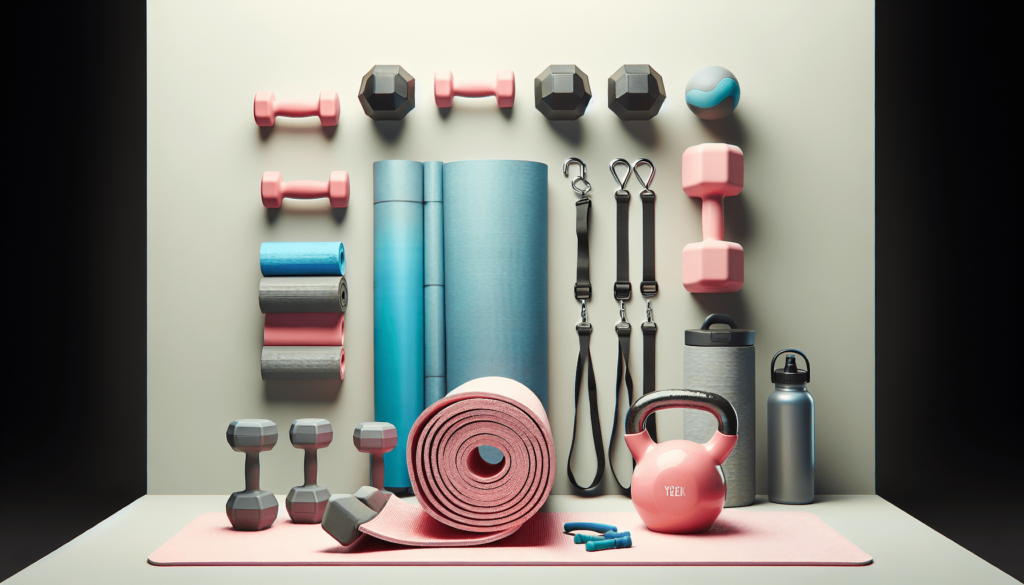
7. Foam Roller
A foam roller is an essential tool for muscle recovery and injury prevention.
Importance of Recovery
Using a foam roller helps to release muscle tightness, improve blood flow, and enhance muscle recovery post-workout. It’s especially useful for rolling out sore muscles and preventing aches and pains.
How to Use a Foam Roller
Focus on rolling out major muscle groups like your hamstrings, quads, and back. Spend about 30 seconds to a minute on each muscle group.
8. Ankle Weights
Ankle weights can add an extra challenge to your lower body and core workouts.
Versatile Use
They are great for adding resistance to exercises such as leg lifts, walking, and running. This added resistance can help in toning and strengthening your muscles more effectively.
Selecting Ankle Weights
Begin with lighter weights, around 1 to 2 pounds per ankle, and gradually increase the weight as you get stronger.

9. Pull-up Bar
A pull-up bar can greatly enhance your upper body strength, particularly your back and arm muscles.
Benefits of a Pull-up Bar
Pull-up exercises are highly effective for building upper body strength and muscle mass. If you can’t do a pull-up yet, a pull-up bar can also be used for hanging exercises and stretching.
Types of Pull-up Bars
There are doorframe pull-up bars, free-standing pull-up bars, and mounted pull-up bars. For beginners, a doorframe pull-up bar is often the most convenient option.
10. Fitness Tracker
Keeping track of your progress is vital for staying motivated, and a fitness tracker can make this easy.
Why Track Your Fitness?
A fitness tracker helps you monitor various metrics like step count, heart rate, calories burned, and workout duration. This data can help you adjust your routines and set realistic goals.
Picking a Fitness Tracker
Choose a fitness tracker that offers the features most relevant to your goals. Basic models track steps and heart rate, while advanced models offer features like GPS tracking, sleep monitoring, and workout recommendations.
With these essential pieces of equipment, you’ll be well on your way to establishing a solid fitness routine. Remember, the key is consistency, and using these tools can make your workouts more effective and enjoyable.
Here’s a quick summary of the equipment essentials:
| Equipment | Primary Use | Why It’s Essential |
|---|---|---|
| Dumbbells | Strength training | Versatile, targets multiple muscle groups |
| Resistance Bands | Strength and flexibility training | Portable, affordable, good for various exercises |
| Yoga Mat | All floor exercises | Cushioning, non-slip surface, prevents injuries |
| Jump Rope | Cardio workouts | Inexpensive, effective cardio exercise |
| Stability Ball | Core strength and balance | Engages core, improves balance |
| Kettlebell | Strength and cardio workouts | Dynamic movements, enhances grip strength |
| Foam Roller | Muscle recovery | Releases muscle tightness, improves recovery |
| Ankle Weights | Lower body and core workouts | Adds resistance, effective muscle toning |
| Pull-up Bar | Upper body strength | Builds upper body muscles, versatile use |
| Fitness Tracker | Monitoring exercise metrics | Tracks progress, helps in setting and achieving goals |
Conclusion
Choosing the right fitness equipment can greatly enhance your workout experience, making it more productive and enjoyable. This list of ten essential items provides a strong foundation for any beginner looking to take their fitness to the next level. Start with these basics, and as you grow more comfortable and confident, you can always expand your collection to include more specialized gear. Remember, the best investment you can make is in your health, and having the right tools will set you on the path to achieving your fitness goals.