
Have you ever wondered how to turn your living room into a fitness haven? Whether you’re looking to save time, money, or just want the convenience of sweating it out in your pajamas, home workouts can be incredibly effective. The key to a successful home workout routine lies in having the right equipment. In “Essential Equipment for Home Workout Routines,” you’ll discover everything you need to transform your space into a personal gym.
Introduction
Creating a home gym might seem daunting at first, but it’s much more attainable than you might think. A well-equipped home workout space can help you stay consistent with your fitness goals, offering the flexibility to exercise whenever you want. Let’s break down the essential equipment that can elevate your home workouts and ensure you’re getting the most out of your efforts.
The Basics
Yoga Mat
A yoga mat isn’t just for yoga. It provides a cushioned, non-slip surface for a range of exercises, from stretches and core work to strength training and cardio. Investing in a high-quality yoga mat will offer you the stability and comfort you need.
Features to Look For:
- Thickness: Look for mats that are at least 1/4 inch thick for added comfort.
- Material: While PVC mats are durable, eco-friendly options like natural rubber are also available.
- Texture: A textured surface can provide extra grip, essential for dynamic workouts.
Dumbbells
Dumbbells are another cornerstone of any home gym setup. They are versatile, allowing you to perform a variety of exercises targeting different muscle groups, such as bicep curls, tricep extensions, and shoulder presses.
Features to Look For:
- Adjustable vs Fixed: Adjustable sets save space but might require more time to change weights during workouts.
- Material: Rubber-coated dumbbells are kinder to your floors and quieter than their metal counterparts.
- Weight Range: For most home workouts, having a range between 5 lbs and 50 lbs will suffice.
Resistance Bands
Resistance bands are compact, versatile, and can provide a full-body workout. They come in various resistance levels, making them suitable for beginners and advanced users alike.
Features to Look For:
- Loop vs Handle: Loop bands are great for lower body moves, whereas handle bands offer better grip for upper-body exercises.
- Material: Latex bands tend to be more durable but always check for hypoallergenic options if you have sensitivities.
- Resistance Levels: Ideally, get a set that includes light, medium, and heavy resistance bands to cater to different exercises.

Intermediate Equipment
Kettlebells
Kettlebells add a dynamic aspect to your strength workouts. Their unique shape requires you to engage multiple muscle groups and stabilizers, making each movement more challenging.
Features to Look For:
- Weight: Beginners may start with 10-20 lbs, while more advanced users might need 30-50 lbs.
- Handle Width: Ensure it’s wide enough to grip with both hands comfortably.
- Material: Cast-iron kettlebells are durable, but you can also find rubber-coated options for reduced noise and floor protection.
Pull-Up Bar
A pull-up bar allows you to perform various upper body exercises at home, from pull-ups to hanging leg raises. These bars can be installed in doorways or mounted on walls.
Features to Look For:
- Type: Doorway bars are versatile but check that your doorframe can support it. Wall-mounted bars provide more stability.
- Grip Options: Multiple grip positions can add variety to your workouts.
- Weight Capacity: Ensure it supports your body weight along with any additional weights you might use.
Stability Ball
A stability ball can be used for balance training, core workouts, and even as a bench alternative for weightlifting. It challenges your muscles to work harder by adding instability to your exercises.
Features to Look For:
- Size: Common sizes include 55 cm, 65 cm, and 75 cm. Choose based on your height.
- Anti-Burst: Look for high-quality, anti-burst materials to ensure safety.
- Surface Texture: A textured surface can provide extra grip, preventing the ball from slipping.
Advanced Equipment
Adjustable Bench
An adjustable bench can be used for a multitude of exercises, from bench presses to step-ups. An adjustable bench allows you to change the angle, adding variety and complexity to your workouts.
Features to Look For:
- Adjustment Ranges: Look for benches that offer both incline and decline settings.
- Stability: Ensure that it’s sturdy and doesn’t wobble.
- Padding: Comfortable, high-density foam padding can make your workouts more enjoyable.
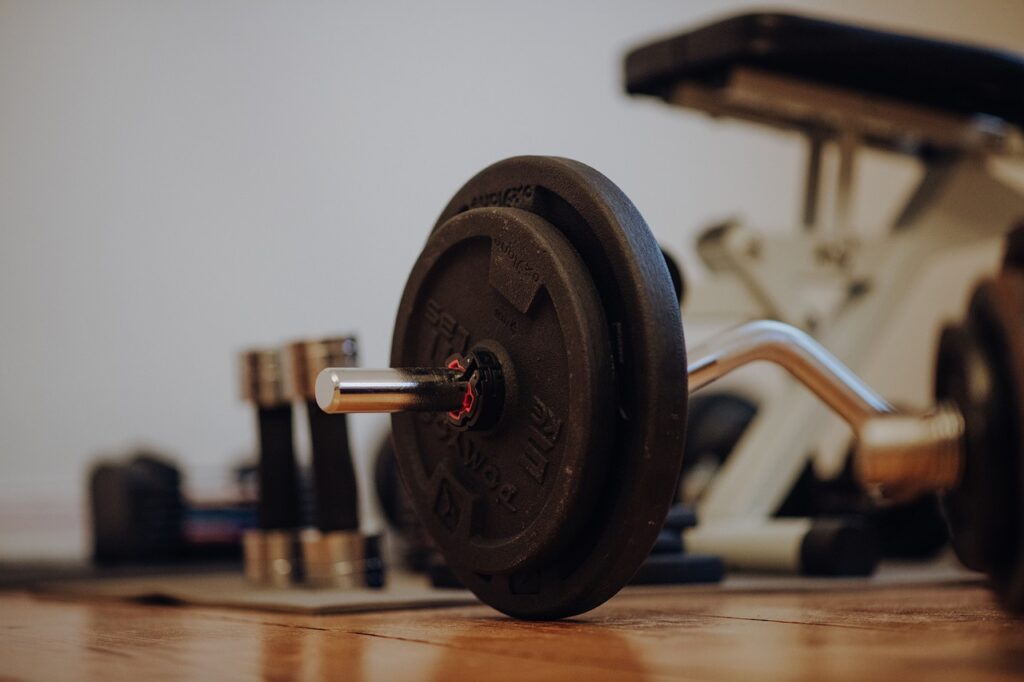
Barbell and Weight Plates
For those serious about strength training, a barbell and weight plates are indispensable. They allow for heavy lifting, including squats, deadlifts, and bench presses.
Features to Look For:
- Barbell Type: Olympic barbells are the standard choice. Men’s bars are typically 7 feet long and 44 lbs, while women’s bars are 6.5 feet and 33 lbs.
- Plates: Make sure to get a variety of weight plates (e.g., 5 lbs, 10 lbs, 25 lbs, 45 lbs) for flexibility.
Cardio Machines
Investing in cardio equipment can significantly enhance your home workout routine. Whether you prefer running, cycling, or rowing, having a cardio machine at home can help you burn calories and improve cardiovascular health.
Treadmill
Features to Look For:
- Motor: Opt for a motor with at least 2.5 HP for reliability.
- Running Surface: A larger running surface (at least 20” x 60”) provides a more comfortable experience.
- Incline: Machines with adjustable incline settings can add variety to your workouts.
Stationary Bike
Features to Look For:
- Resistance Type: Magnetic resistance systems are quieter and more precise than friction-based ones.
- Comfort: Adjustable seats and handlebars for a perfect fit.
- Features: LCD screens, built-in workouts, and heart rate monitors can enhance your experience.
Rowing Machine
Features to Look For:
- Resistance Type: Air resistance provides a smooth experience, while magnetic resistance offers quieter operation.
- Seat Comfort: Look for padded, ergonomic seats.
- Mobility: Foldable or lightweight models can save space.
Additional Accessories
Jump Rope
A jump rope is a simple yet effective tool for cardio and agility training. It’s compact, inexpensive, and can be used almost anywhere.
Features to Look For:
- Adjustable Length: Ensure you can adjust it to your height.
- Handles: Look for comfortable, anti-slip handles.
- Material: Speed ropes (typically made of steel cable) are great for high-intensity workouts, while beaded ropes (plastic segments) are more durable for outdoor use.
Foam Roller
Incorporating a foam roller into your routine can aid in muscle recovery and flexibility. It helps in releasing muscle tightness and improving blood flow.
Features to Look For:
- Density: Medium-density rollers are generally sufficient for most users.
- Size: A standard 36-inch length offers versatility for whole-body use.
- Texture: Smooth rollers are good for beginners, while textured ones target deeper muscle groups.
Ankle Weights
Ankle weights can add resistance to lower-body exercises, making them more challenging and effective. They’re great for exercises like leg lifts, glute bridges, and walking.
Features to Look For:
- Weight: Start with lighter options (1-2 lbs each) and progress as you build strength.
- Comfort: Look for adjustable, cushioned straps for a secure fit.
- Flexibility: Choose weights that allow you to add or remove individual weight bars for varying intensity.
Setting Up Your Home Workout Space
Space Considerations
Before you start buying equipment, take stock of your available space. Even if you have limited room, strategic placement can make a big difference.
Tips:
- Measure Your Space: Knowing your dimensions helps in choosing equipment that fits.
- Multi-Functional Equipment: Opt for items that serve multiple purposes, like an adjustable bench that can also be used for step-ups or a sandbag.
- Storage Solutions: Use storage racks and shelves to keep your space organized.
Budgeting
Equipping your home gym doesn’t need to break the bank. Prioritize based on your fitness goals and gradually add more equipment over time.
Tips:
- Start Small: Focus on purchasing essential items first, like dumbbells and a yoga mat.
- Second-Hand: Check for used equipment in good condition to save money.
- Sales and Discounts: Take advantage of seasonal sales or memberships for discounted prices.
Routine Planning
Mix It Up
To avoid hitting a plateau, it’s crucial to keep your routines varied. Different types of exercises will target different muscle groups and keep your workouts interesting.
Plan Types:
- Strength Training: Focus on pushing and pulling motions, and incorporate free weights and resistance bands.
- Cardio: Mix in HIIT, jogging, or cycling.
- Flexibility: Regularly integrate yoga or stretching exercises.
- Recovery: Use foam rollers and light exercises to aid muscle recovery.
Scheduling
Sticking to a consistent workout schedule can help you achieve your fitness goals. Plan your sessions ahead of time, allocating specific days for different types of workouts.
Templates:
| Day | Workout Type |
|---|---|
| Monday | Strength |
| Tuesday | Cardio |
| Wednesday | Flexibility |
| Thursday | Strength |
| Friday | Cardio |
| Saturday | Flexibility |
| Sunday | Rest/Recovery |
Use this template as a starting point and adjust based on your preferences and fitness level.
Conclusion
Having the right equipment can make all the difference in your home workout routine. Whether you’re a beginner just starting out or an advanced athlete looking to maintain muscle tone and cardiovascular health, investing in these essential items can lead to significant improvements. Remember, consistency is key, and with a well-equipped home gym, you’ll be well on your way to achieving your fitness goals. Happy training!