
Have you ever embarked on a fitness journey and found it challenging to maintain self-love and acceptance along the way? It’s not uncommon to feel overwhelmed by external pressures and internal criticisms. The key is to adopt a mindset that nurtures your well-being from the inside out.
Understanding Self-Love and Acceptance
What is Self-Love?
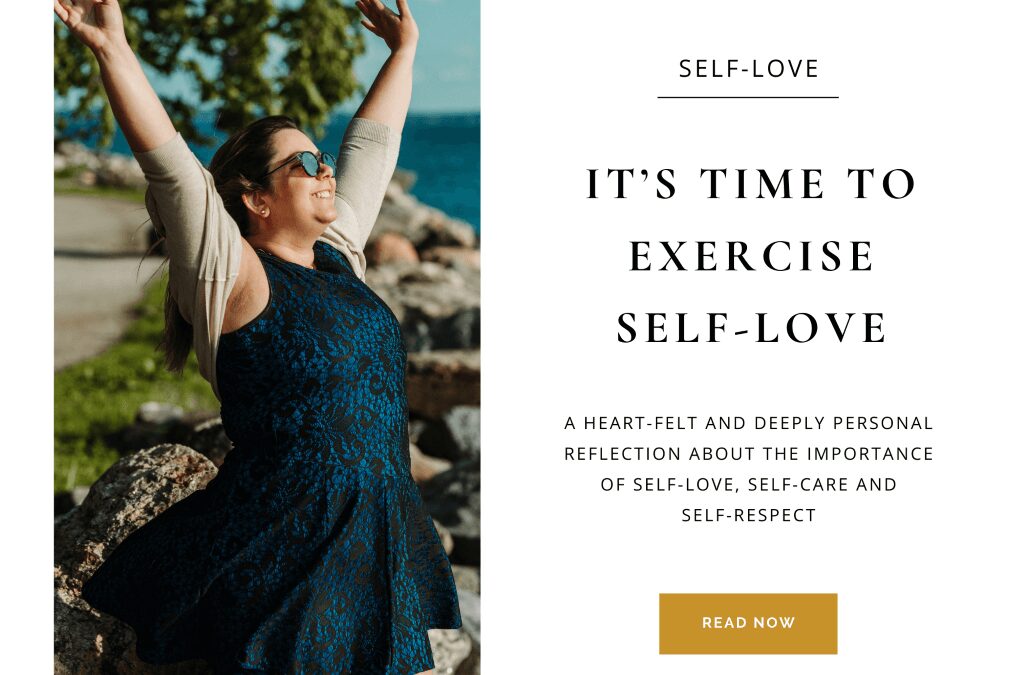
Self-love is the practice of taking care of your own needs and not sacrificing your well-being for others. It’s about knowing your worth and recognizing that you deserve kindness, respect, and happiness. On your fitness journey, self-love is crucial because it helps you stay committed and motivated in a healthy, uplifting manner.
The Importance of Self-Acceptance
Self-acceptance means embracing all parts of yourself without judgment. It involves recognizing your strengths and weaknesses, and understanding that imperfections don’t diminish your value. When it comes to fitness, self-acceptance allows you to appreciate your current state while aspiring to improve.
The Interplay Between Self-Love and Acceptance
These two concepts are interconnected. Practicing self-love bolsters your self-acceptance and vice versa. Together, they form a powerful foundation that can transform your fitness journey into a holistic experience promoting mental and physical health.
Setting Realistic and Compassionate Goals
Why Goals Matter
Setting goals provides direction and motivation. However, unrealistic goals can lead to disappointment and self-criticism. It’s essential to aim for targets that are achievable and aligned with your current abilities and lifestyle.
SMART Goals
Using the SMART framework (Specific, Measurable, Achievable, Relevant, Time-bound) can help you set goals that are both motivating and attainable.
| Aspect | Explanation | Example |
|---|---|---|
| Specific | Define your goal in clear terms | “I want to run a 5k race” |
| Measurable | Quantify the outcome | “I will run 5 kilometers without stopping” |
| Achievable | Ensure it’s realistic | “I will train 3 times a week to build up my endurance” |
| Relevant | Make sure it matters to you | “Participating in this race will improve my cardiovascular fitness” |
| Time-bound | Set a deadline | “I will achieve this within 3 months” |
Practicing Patience
Achieving fitness goals takes time. Celebrate incremental progress and remember that every small step forward is an achievement. Patience is an essential aspect of self-love and acceptance.
Incorporating Compassionate Self-Talk
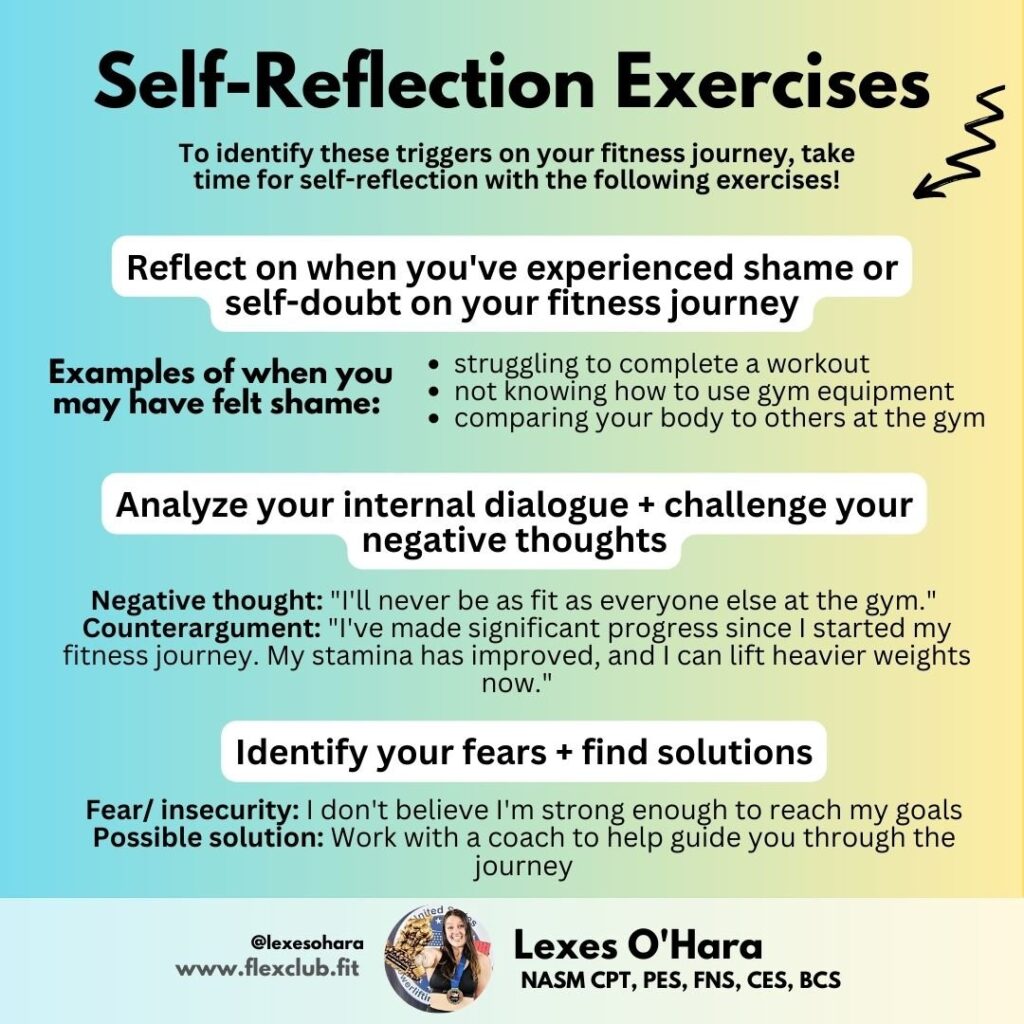
Identifying Negative Self-Talk
Negative self-talk can sabotage your efforts and diminish your self-worth. Phrases like “I’m not good enough” or “I’ll never achieve my goals” are detrimental. Recognize these thoughts and challenge them.
Replacing Negatives with Positives
Transform negative self-talk into positive affirmations. Instead of saying, “I’m so out of shape,” try, “I’m working on improving my fitness day by day.” This shift promotes a healthy, supportive mindset.
Acceptance Phrases
Integrate phrases that foster acceptance. Say to yourself, “I’m proud of the effort I’m putting in,” or “It’s okay to have ups and downs in my journey.” These affirmations reinforce self-love.
Creating a Supportive Environment
Physical Environment
A supportive environment can enhance your fitness journey. This includes having access to exercise equipment, nutritious foods, and a space where you can work out comfortably.
Social Circle
Surround yourself with people who encourage and support your fitness goals. Join fitness communities or partner with friends or family members who share your interests.
Mental Space
Guard your mental space by limiting exposure to negativity. Avoid social media accounts or influences that make you feel inadequate or pressured to conform to unrealistic standards.
Practicing Mindful Movement
What is Mindful Movement?
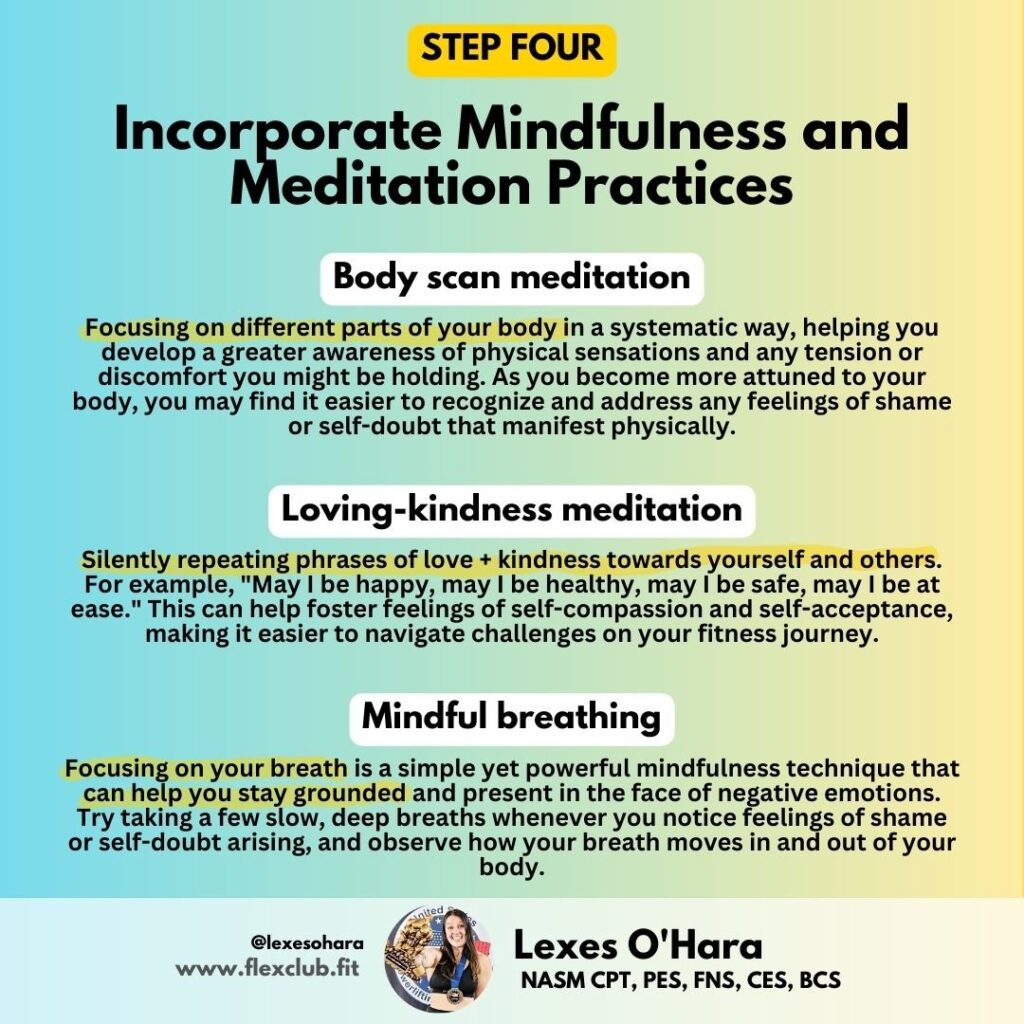
Mindful movement is the practice of paying full attention to your body as you move. This can be integrated into various activities such as yoga, walking, or even strength training.
Benefits of Mindful Movement
Mindful movement helps you stay present, reduces stress, and enhances your connection with your body. It encourages you to appreciate what your body can do rather than focusing on its limitations.
Tips for Mindful Movement
- Start Slow: Pay attention to your breath and how it coordinates with your movement.
- Focus on Sensations: Notice how your muscles feel during each movement.
- Avoid Distractions: Create a calm environment free from distractions.
- Practice Gratitude: Acknowledge and appreciate your body’s capabilities.
Embracing Your Unique Journey
Comparison is the Thief of Joy
Comparing yourself to others can lead to feelings of inadequacy. Remember that everyone’s fitness journey is unique. Celebrate your personal progress without juxtaposing it with someone else’s.
Your Body, Your Rules
Your body is uniquely yours. Understand what works for you and respect your own boundaries. Stop pushing yourself excessively and listen to your body’s signals. This approach fosters a loving and accepting relationship with yourself.
Celebrate Your Non-Scale Victories
Non-scale victories (NSVs) are milestones that don’t involve weight loss. These include improvements in mood, strength, stamina, and even your clothes fitting better. Acknowledge these wins as they are significant markers of your progress.
| Type of Victory | Example |
|---|---|
| Improved Strength | Lifting heavier weights than before |
| Enhanced Endurance | Running or cycling longer distances |
| Mental Well-being | Feeling less stressed or anxious post-exercise |
| Better Sleep | Experiencing deeper and more restful sleep |
| Positive Body Changes | Noticing muscle definition or improved posture |
Prioritizing Self-Care
The Role of Rest and Recovery
Rest and recovery are integral to any fitness journey. Overworking your body can lead to injuries and burnout. Ensuring adequate sleep and taking rest days will help your body heal and grow stronger.
Nutrition as Self-Care
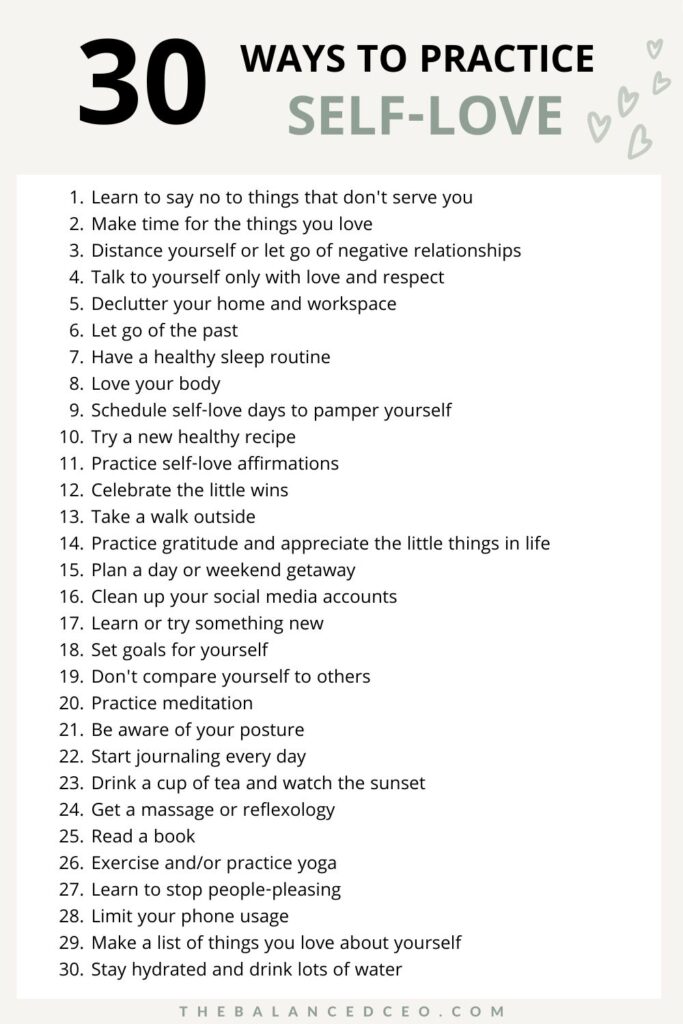
Nourishing your body with wholesome foods is an act of self-love. Rather than viewing nutrition as a restrictive measure, see it as a way to fuel your body and support your fitness goals.
Mental Health Care
Mental health is just as important as physical health. Incorporate activities that promote relaxation and reduce stress, such as meditation, reading, or spending time in nature.
Seeking Professional Guidance
Personal Trainers
A personal trainer can provide you with a tailored fitness plan that aligns with your goals and abilities. They can also offer motivation and support, ensuring you’re exercising safely and effectively.
Nutritionists and Dietitians
Consulting a nutritionist or dietitian can help you create a balanced and nourishing eating plan. They can offer personalized advice based on your dietary needs and fitness goals.
Mental Health Professionals
A therapist or counselor can assist you in developing strategies to cope with stress, anxiety, or any other mental health challenges you may face on your fitness journey. Their guidance can help you cultivate a more positive self-image and mindset.
Accepting and Learning from Setbacks
The Reality of Setbacks
Setbacks are a natural part of any fitness journey. Whether it’s missing a workout, experiencing an injury, or dealing with a lack of motivation, it’s important to understand that these challenges are temporary.
Turning Setbacks into Learning Opportunities
Instead of viewing setbacks as failures, see them as opportunities to learn and grow. Reflect on what caused the setback and develop strategies to overcome similar challenges in the future.
| Setback Example | Learning Opportunity |
|---|---|
| Missed Workouts | Assess your schedule and find a sustainable routine |
| Injury | Focus on proper technique and rest as needed |
| Lack of Motivation | Revisit your goals and reminders of your “why” |
| Nutritional Lapses | Plan meals ahead and practice mindful eating |
Forgiving Yourself
Be kind to yourself when setbacks occur. Forgive yourself and move forward with renewed determination. Remember, your fitness journey is a marathon, not a sprint.
Sustaining Self-Love and Acceptance
Regular Self-Check-Ins
Perform regular self-check-ins to evaluate your progress and mindset. Ask yourself how you’re feeling physically and emotionally, and adjust your practices accordingly.
Journaling Your Journey
Keeping a journal can help you track your progress, reflect on your experiences, and express your thoughts and emotions. It’s a powerful tool for fostering self-love and acceptance.
Celebrating Milestones
Celebrate your achievements, no matter how small. Recognizing your hard work and progress reinforces your commitment and boosts your self-esteem.
Conclusion
Embracing self-love and acceptance on your fitness journey is vital for long-term success and well-being. By setting realistic goals, practicing compassionate self-talk, creating a supportive environment, and prioritizing self-care, you can cultivate a positive and nurturing relationship with yourself. Remember, your fitness journey is unique to you. Celebrate every step, learn from setbacks, and always treat yourself with the kindness and respect you deserve.