
Have you ever found yourself tossing and turning at night, unable to fall into a restful sleep? You’re certainly not alone. Many people struggle with sleep issues, and while there are various remedies to consider, one often-overlooked solution is exercise. The right workout routine can significantly improve the quality of your sleep. Let’s explore how different exercises can contribute to a better night’s rest.

The Connection Between Exercise and Sleep
Understanding Sleep Stages and Quality
To understand how exercise impacts your sleep, it’s first essential to grasp what happens when you sleep. Sleep is composed of multiple stages, including REM (Rapid Eye Movement) and non-REM sleep. Each of these stages has its unique benefits, from cognitive repair to physical rejuvenation. The quality of sleep you get depends on how well you cycle through these stages. Effective workouts can harmonize this cycle, enhancing overall sleep quality.
The Science Behind Exercise and Sleep
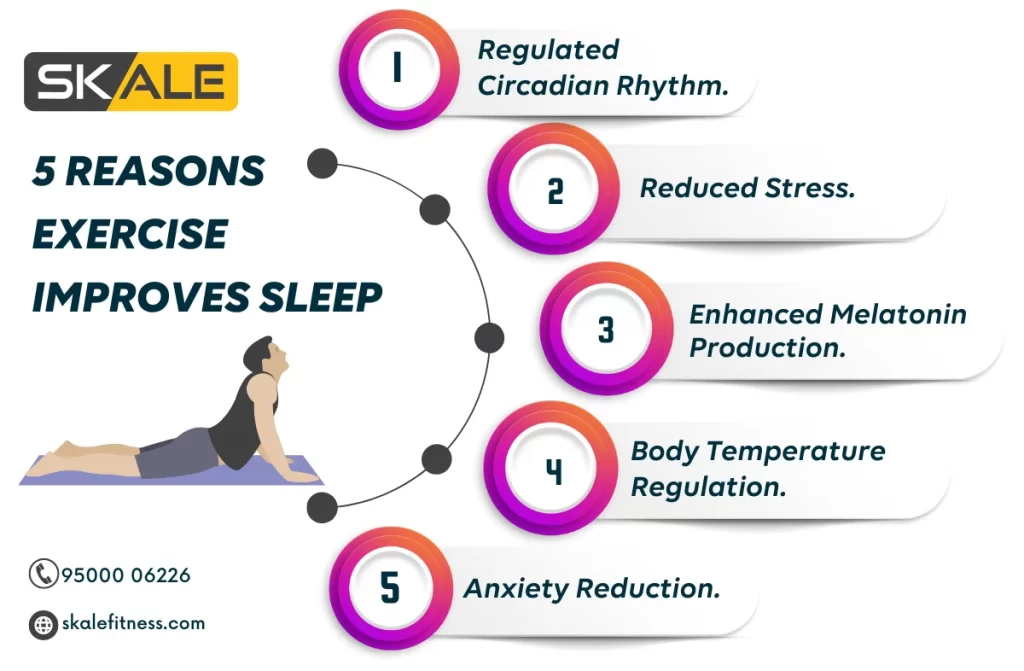
Research has shown that regular physical activity can help you fall asleep faster and deepen your sleep. When you exercise, your body temperature rises. Post-exercise, as your temperature drops, it signals to your body that it’s time to sleep. Additionally, physical exertion can alleviate anxiety and depressions, known disruptors of sleep. Thus, incorporating the right workout routine can lead to improved sleep duration and effectiveness.
Ideal Types of Exercise for Better Sleep
Aerobic Exercises
Aerobic or cardiovascular exercises are highly effective in promoting better sleep. Activities such as walking, swimming, and cycling can increase the amount of slow-wave sleep you get. Slow-wave sleep is crucial for healing and rejuvenation of the body and mind.
Examples of Aerobic Exercises:
| Exercise | Duration | Intensity Level |
|---|---|---|
| Brisk Walking | 30-45 minutes | Moderate |
| Swimming | 20-30 minutes | Moderate |
| Cycling | 30-45 minutes | Moderate |
| Jogging | 20-30 minutes | High |
Strength Training
Engaging in strength training can improve your sleep quality by releasing endorphins, the feel-good hormones. It also helps in building muscle mass and increasing your metabolic rate, which can lead to better overall health.
Examples of Strength Training:
| Exercise | Repetitions | Sets |
|---|---|---|
| Weight Lifting | 8-12 reps | 3-4 sets |
| Bodyweight Exercises | 12-15 reps | 3 sets |
| Resistance Bands Exercises | 10-15 reps | 3 sets |
| Circuit Training | 10-12 reps | 3-4 sets |
Yoga and Stretching
Yoga and stretching are excellent for improving sleep due to their relaxing nature. These exercises focus on controlled breathing, stretching, and meditation, which can reduce stress levels significantly.
Examples of Yoga Poses:
| Pose | Duration | Benefit |
|---|---|---|
| Child’s Pose (Balasana) | 3-5 minutes | Stress Relief |
| Legs Up The Wall (Viparita Karani) | 5-10 minutes | Improved Circulation |
| Forward Bend (Uttanasana) | 1-2 minutes | Calming Mind |
| Corpse Pose (Savasana) | 10 minutes | Deep Relaxation |
Pilates
Pilates is another form of exercise that promotes better sleep by focusing on body alignment, breathing, and core strength. It can enhance physical function, which in turn helps to improve the sleep cycle.
Examples of Pilates Exercises:
| Exercise | Duration | Sets |
|---|---|---|
| The Hundred | 1 minute | 2-3 sets |
| Rolling Like a Ball | 1 minute | 2-3 sets |
| Single-Leg Stretch | 1 minute | 2-3 sets |
| Plank | 1 minute | 2-3 sets |
The Best Time to Exercise for Sleep Benefits
Morning Workouts
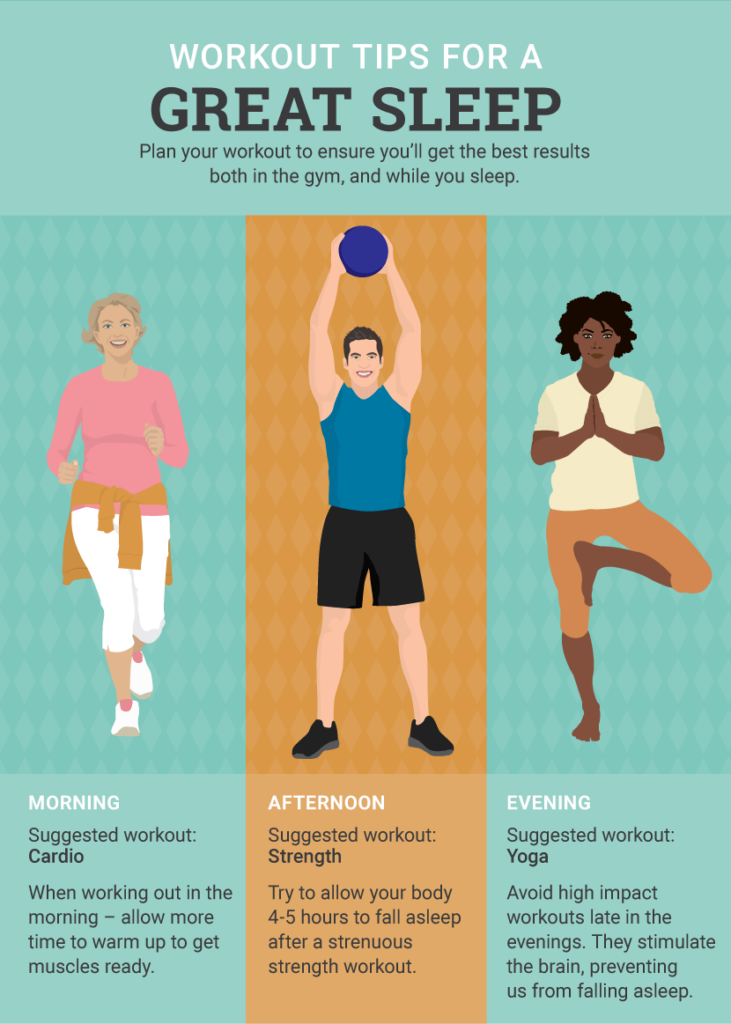
Morning workouts have numerous benefits, including boosting your metabolism and setting a positive tone for the day. They can regulate your body’s internal clock (circadian rhythm), which is crucial for maintaining a consistent sleep schedule.
Afternoon Workouts
Exercising in the afternoon can be beneficial for those who can’t find time in the morning. A moderate afternoon workout can help you release the day’s stress and prepare your body for rest in the evening.
Evening Workouts – A Double-Edged Sword
While many believe that evening workouts might interfere with sleep due to increased adrenaline levels, some studies suggest that moderate exercise in the evening can actually promote better sleep. The key is to avoid high-intensity exercises close to bedtime as they can make falling asleep harder.
Creating Your Personalized Workout Routine for Better Sleep
Assessing Your Current Fitness Level
Before you start any new workout routine, it’s essential to evaluate your current fitness level. Knowing where you stand can help you choose exercises that are both challenging and realistic.
Establishing Short and Long-Term Goals
Setting achievable short-term and long-term goals will keep you motivated and on track. Short-term goals might include working out three times a week, while long-term goals might focus on achieving a particular fitness milestone or improving sleep quality.
Balancing Different Types of Exercise
A well-rounded workout routine should include a mix of aerobic exercises, strength training, and flexibility workouts. This balanced approach can offer multiple benefits, including enhanced sleep quality.
Sample Weekly Workout Routine:
| Day | Exercise Type | Duration | Notes |
|---|---|---|---|
| Monday | Aerobic | 30-45 minutes | Brisk Walking |
| Tuesday | Strength Training | 45 minutes | Full-Body Workout |
| Wednesday | Yoga | 30 minutes | Focus on Relaxation |
| Thursday | Aerobic | 30-45 minutes | Cycling |
| Friday | Strength Training | 45 minutes | Core and Upper Body |
| Saturday | Pilates | 30 minutes | Core Strengthening |
| Sunday | Rest or Gentle Yoga | 20-30 minutes | Deep Stretching |
Tips for Maintaining Consistency
Setting a Routine
Consistency is key when it comes to reaping the sleep benefits of exercise. Establish a regular workout schedule and stick to it.
Keeping a Workout Journal
Recording your workouts in a journal can help you track your progress and stay motivated. Note down the type of exercise, duration, and how you felt afterward.
Joining a Community or Finding a Workout Buddy
Having a support system can make sticking to your workout routine easier. Consider joining a fitness class or finding a workout buddy to keep yourself accountable.
Additional Lifestyle Changes For Better Sleep
Healthy Eating Habits
What you eat can significantly impact your sleep quality. Avoid heavy meals before bedtime and opt for light, sleep-promoting snacks.
Limiting Caffeine and Alcohol
Consumption of caffeine and alcohol can disrupt your sleep cycle. Try to limit these substances, especially in the hours leading up to bedtime.
Establishing a Relaxing Bedtime Routine
Creating a calming pre-sleep routine can signal to your body that it’s time to wind down. Activities like reading, taking a warm bath, or practicing mindful meditation can be highly effective.
Controlling Your Sleep Environment
Your bedroom should be a sanctuary for sleep. Keep the room cool, dark, and quiet to create the perfect environment for restful slumber.

Monitoring Your Progress
Using Sleep Tracking Devices or Apps
Investing in a sleep tracker can give you valuable insights into your sleep patterns and the effectiveness of your workout routine. Some popular options include fitness watches and smartphone apps.
Popular Sleep Tracking Apps:
| App Name | Features | Price |
|---|---|---|
| Sleep Cycle | Sleep Analysis, Smart Alarm | Free/$29.99/year |
| Fitbit | Comprehensive Tracking | Device required |
| Pillow | Sleep Cycle Analysis | Free/$4.99 one-time |
| Calm | Sleep Stories, Meditations | Free/$59.99/year |
Conducting Self-Assessments
Self-assessments can be as simple as noting down how you feel upon waking and your perceived sleep quality each night. Comparing these notes over time can help you identify patterns and make necessary adjustments.
Consulting Professionals
If sleep issues persist despite regular exercise, consulting a healthcare provider is advisable. They can offer targeted advice and check for underlying sleep disorders.
Conclusion
Improving sleep is often a multifaceted approach requiring several lifestyle adjustments. Among these adjustments, incorporating the right workout routine can serve as a powerful tool for achieving better sleep. Exercise not only helps in regulating your sleep cycle but also offers numerous other health benefits that contribute to overall well-being.
Remember, the goal is gradual progress. Find the exercises that suit you best, maintain consistency, and make other necessary lifestyle changes to enhance your sleep quality. By doing so, you’ll be well on your way to enjoying more restful nights and energized days.
Feel free to revisit this guide as you develop and refine your workout routine for better sleep. Your journey to improved sleep and better health is just beginning.
